Traditional games continue to attract people because they offer simple entertainment without requiring complicated equipment or technology. Many classic activities also encourage concentration, patience, and friendly competition. The Mikado game is a well-known example, enjoyed by children and adults who appreciate games that combine careful movement with strategic thinking.
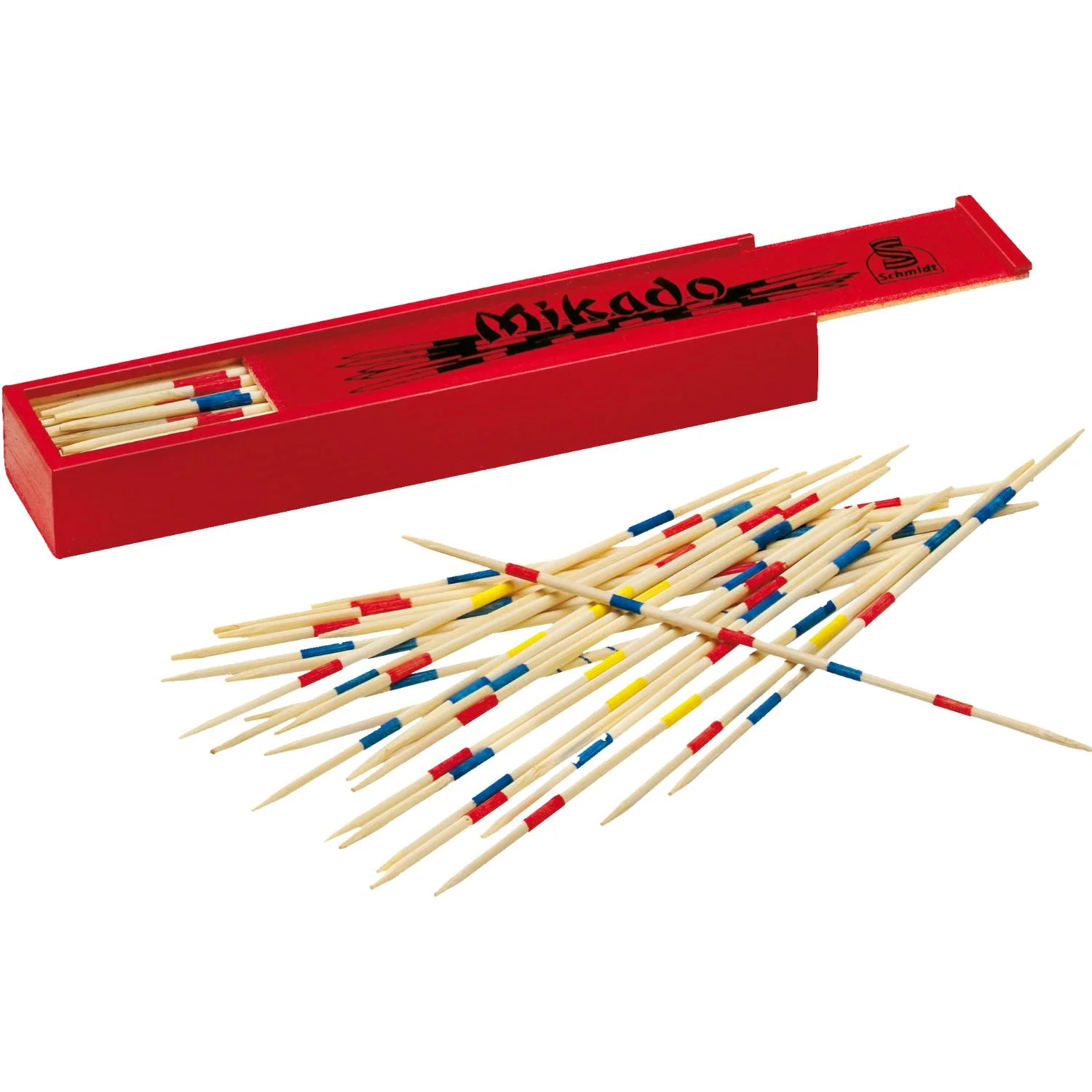
A Mikado Game set typically consists of a collection of thin wooden sticks marked with different colors or patterns. Players take turns removing individual sticks from a pile without disturbing the others. Although the rules are easy to understand, winning requires a steady hand, careful observation, and thoughtful decisions. Its compact design and straightforward gameplay make it suitable for family gatherings, classrooms, travel, and recreational activities.
What Is the Mikado Game?
Mikado is a traditional pick-up sticks game in which players collect individual sticks from a scattered pile. Each stick may carry a different marking that represents a particular point value.
The main objective is to collect as many points as possible by removing sticks without moving the surrounding pieces. Players must observe the arrangement carefully and select sticks that can be lifted without disturbing the rest.
The game is popular for several reasons:
- It has simple rules that beginners can learn quickly.
- It requires minimal playing space.
- It encourages patience and concentration.
- It can be enjoyed by different age groups.
- It provides opportunities for friendly competition.
- It is easy to store and transport.
Despite its simple appearance, Mikado can become surprisingly challenging as players try to remove difficult sticks from tightly arranged groups.
What Does a Mikado Game Set Include?
A standard set generally contains a collection of thin sticks, often made from wood or another suitable material. The number of sticks and their markings can vary depending on the manufacturer.
1. Wooden Playing Sticks
The sticks are the main components of the game. They are usually long, narrow, and lightweight, allowing players to lift them carefully using their fingers.
The sticks may have colored rings, stripes, or other decorative markings. These patterns help distinguish different categories and point values.
When choosing a set, look for sticks that are:
- Straight and evenly shaped
- Smoothly finished
- Free from splinters
- Consistent in length and thickness
- Easy to distinguish by their markings
2. Color or Pattern Markings
Different stick designs represent different scoring values. Higher-value sticks may have distinctive markings that make them easier to identify.
Clear markings help players recognize the value of each piece and decide which sticks they should attempt to collect.
3. Storage Box or Container
Many sets include a small box or container for keeping the sticks together. This is useful because individual pieces can easily become misplaced if they are stored loosely.
A practical storage design also makes the game convenient to carry during trips or outdoor activities.
4. Instruction Guide
Some products include a guide explaining the rules and scoring system. This can be helpful for beginners who are unfamiliar with the traditional game.
Since scoring arrangements can differ between versions, players should check the instructions supplied with their particular set.
How to Play the Mikado Game
The basic rules are easy to understand, making Mikado suitable for casual play at home, school, or social gatherings.
Step 1: Prepare the Sticks
Gather all the sticks and hold them together vertically in one hand. Position the lower ends on a flat playing surface, then release them so that they fall into a loose pile.
The sticks should overlap and form a scattered arrangement.
Step 2: Decide Who Plays First
Players can choose the starting person through a simple method, such as drawing lots or taking turns in a predetermined order.
Step 3: Select a Stick
The first player examines the pile and chooses a stick that can be removed without disturbing the others.
The player should use their fingers to lift the selected stick carefully.
Step 4: Continue Collecting Sticks
If the player successfully removes a stick without moving the surrounding pieces, they keep it. Under many traditional rule variations, the same player may continue taking turns until an unsuccessful attempt occurs.
If another stick moves, the turn usually passes to the next player.
Step 5: Calculate the Score
At the end of the game, players count the values of the sticks they have collected. The person with the highest total score wins.
The exact point values depend on the markings and scoring system used by the set.
Understanding Mikado Game Scoring
Scoring is an important part of the game because not all sticks necessarily have the same value.
Traditional sets often use different colors or ring combinations to distinguish scoring categories. Some versions include a special high-value stick known as the Mikado, while others use a different arrangement of point values.
Before starting, players should agree on the scoring rules or follow the instructions provided with the set.
A typical scoring approach may include:
| Stick category | Purpose in scoring |
|---|---|
| Special marked stick | Usually carries the highest point value |
| Multiple-ring sticks | Represent higher or intermediate values |
| Single-color sticks | Often carry lower point values |
| Other marked sticks | Follow the scoring guide supplied with the set |
The markings and values are not identical across all manufacturers, so players should avoid assuming that every Mikado set uses the same scoring system.
Why Is the Mikado Game Still Popular?
Although many modern games use electronic devices and digital interfaces, simple physical games remain appealing. Mikado offers an experience based on direct interaction, observation, and manual skill.
Easy to Learn
The basic objective can be explained in a short amount of time. Beginners can start playing after understanding how to remove sticks without disturbing the others.
Suitable for Different Age Groups
Children, teenagers, and adults can participate together. The difficulty can also be adjusted by changing the arrangement or introducing additional scoring challenges.
Compact and Portable
A typical set takes up relatively little storage space. This makes it convenient for travel, holidays, family visits, and recreational activities.
Encourages Friendly Competition
Players try to collect valuable sticks while avoiding mistakes. This creates a natural sense of competition without requiring complicated equipment or lengthy preparation.
Offers Repeated Entertainment
Every time the sticks are dropped, they form a different arrangement. This means that each round presents new challenges and opportunities to use different techniques.
Educational and Developmental Benefits of Playing Mikado
Mikado is not only an entertaining activity. It can also support several practical skills when played regularly.
1. Improves Fine Motor Control
Removing a thin stick from a crowded pile requires controlled finger movements. Players need to grip the selected piece carefully and lift it without disturbing nearby sticks.
This type of activity provides opportunities to practice precise hand movements.
2. Develops Hand-Eye Coordination
Players must observe the position of each stick and coordinate their hand movements with what they see. Repeated play can help strengthen this connection between visual attention and physical control.
3. Encourages Concentration
A successful move requires players to focus on the selected stick and the surrounding arrangement. Looking carefully before making a move is an important part of the game.
4. Builds Patience
Players cannot simply grab the easiest-looking piece without considering the consequences. They need to slow down, examine the pile, and move carefully.
This encourages patience and thoughtful decision-making.
5. Supports Strategic Thinking
The value of each stick can influence which piece a player chooses. Sometimes collecting a lower-value stick may be safer than attempting a difficult high-value one.
Players gradually learn to balance risk and reward.
6. Introduces Basic Mathematics
Different stick values provide opportunities to practice addition and score comparison. Children can add their points, compare totals, and determine the winner.
7. Encourages Social Interaction
Taking turns, discussing moves, and celebrating successful attempts make the game suitable for group activities.
Tips for Improving Mikado Game Skills
Players can improve their performance through careful observation and controlled movement.
- Study the arrangement: Examine the entire pile before choosing a stick.
- Look for loose pieces: Start by identifying sticks that appear separated from the surrounding group.
- Avoid unnecessary contact: Keep fingers away from nearby sticks whenever possible.
- Use a steady grip: Hold the selected stick gently rather than squeezing it.
- Lift gradually: Slow movements provide better control than sudden pulling.
- Consider point values: Think about whether a high-value stick is worth the risk.
- Practice regularly: Repeated games help players become familiar with different arrangements.
- Stay patient: Rushing can cause unnecessary mistakes.
A controlled approach is generally more effective than trying to remove sticks quickly.
Mikado Game Activities for Families and Schools
The simplicity of Mikado makes it easy to adapt for different recreational and educational settings.
Family Game Nights
Families can play short rounds during evenings or weekends. Players can take turns, calculate their scores, and enjoy a friendly challenge.
Classroom Activities
Teachers can use Mikado as a practical activity involving counting, observation, and concentration. Students can calculate point totals and compare results after each round.
Travel Entertainment
A compact set can provide a screen-free activity during holidays, visits, and suitable travel breaks.
Children’s Skill Challenges
Adults can create simple challenges, such as collecting a specific number of sticks or removing pieces with a particular marking.
Group Competitions
Several players can compete over multiple rounds. Keeping a running score can turn a casual activity into a small tournament.
For younger children, adults should supervise play and ensure that the sticks are appropriate for their age.
Choosing a Quality Mikado Game Set
Different sets may vary in material, construction, stick dimensions, markings, and packaging. Reviewing these details can help buyers find a suitable option.
Material Quality
Wooden sticks are common in traditional Mikado sets. Buyers should check whether the material is properly finished and strong enough for repeated handling.
Stick Dimensions
Consistent length and thickness help make the set easier to use. Very uneven pieces may affect how the sticks fall and how comfortably they can be handled.
Smooth Surface Finish
The sticks should have smooth surfaces without splinters or rough edges. Proper finishing is particularly important when the game is intended for children.
Clear Markings
Different scoring categories should be easy to identify. Clearly applied colors or patterns make the scoring process simpler and reduce confusion during play.
Number of Sticks
The number of pieces can vary between products. Check the product description to confirm that the set contains the quantity expected.
Storage and Packaging
A durable box or container helps protect the sticks and makes storage more convenient. Compact packaging is particularly useful for people who travel frequently.
Wooden Mikado Compared With Other Pick-Up Stick Games
Mikado belongs to a broader category of games involving the careful removal of sticks from a pile. Different versions may use alternative materials, colors, sizes, and scoring arrangements.
| Feature | Traditional wooden Mikado | Other pick-up stick versions |
|---|---|---|
| Material | Commonly wood | May use plastic or other materials |
| Appearance | Often natural or color-marked | Designs vary |
| Stick dimensions | Depend on the set | May be shorter, longer, or thicker |
| Scoring | Often based on different markings | Depends on the game rules |
| Handling | Depends on wood quality and finish | Depends on material and construction |
| Intended use | Family, educational, and recreational play | Varies by design |
Both types can offer enjoyable skill-based entertainment. The most suitable option depends on personal preference, age suitability, and the intended playing environment.
Caring for and Storing Mikado Sticks
Proper care helps maintain the appearance and condition of the sticks.
- Store the sticks in their original box or a suitable container.
- Keep the set in a dry location.
- Avoid prolonged exposure to moisture.
- Clean wooden pieces with a soft, dry cloth.
- Do not bend or force the sticks during play.
- Inspect regularly for cracks, splinters, or damaged markings.
- Replace pieces that become unsafe or unsuitable for use.
Keeping the pieces together also makes it easier to prepare the game for the next session.
Common Mistakes to Avoid When Buying a Mikado Game
A product’s appearance alone does not always indicate its quality. Buyers should review the specifications and included components before making a decision.
Common mistakes include:
- Ignoring material quality: Poorly finished sticks may splinter or become damaged easily.
- Overlooking dimensions: Inconsistent stick sizes can affect handling and gameplay.
- Choosing unclear markings: Difficult-to-identify colors can create confusion during scoring.
- Not checking the quantity: Different sets may contain different numbers of sticks.
- Ignoring storage: A suitable container makes the game easier to transport and maintain.
- Forgetting age suitability: Very young children may require supervision because the sticks are small objects.
- Assuming scoring is universal: Different sets may use different point systems.
Checking these factors can help buyers select equipment that provides a more enjoyable playing experience.
What to Check Before Buying a Mikado Game Online
Online product descriptions provide useful details about materials, dimensions, packaging, and included pieces. Reviewing this information can make it easier to compare different options.
| Buying consideration | What to look for |
|---|---|
| Material | Clearly identified construction material |
| Stick quality | Straight, smooth, and durable pieces |
| Dimensions | Consistent length and thickness |
| Markings | Clear and recognizable colors or patterns |
| Quantity | Confirmed number of sticks |
| Scoring information | Instructions explaining point values |
| Packaging | Practical storage box or container |
| Age suitability | Manufacturer recommendations |
| Maintenance | Appropriate cleaning and storage guidance |
Customer reviews can also offer useful insights into everyday handling, packaging quality, and durability. For schools and activity organizers, it may be helpful to consider whether the set is suitable for repeated use by multiple participants.
Conclusion
The Mikado Game remains a popular traditional activity because it combines simple rules with concentration, patience, coordination, and strategic thinking. Its wooden sticks and compact format make it suitable for family entertainment, educational activities, travel, and social gatherings.
When selecting a set, consider material quality, consistent dimensions, smooth finishing, clear markings, stick quantity, and storage options. Choosing age-appropriate equipment and following the manufacturer’s care instructions can also help maintain the set over time.
With its balance of simplicity and challenge, Mikado offers an enjoyable way for people of different ages to develop practical skills while sharing a friendly competitive experience.