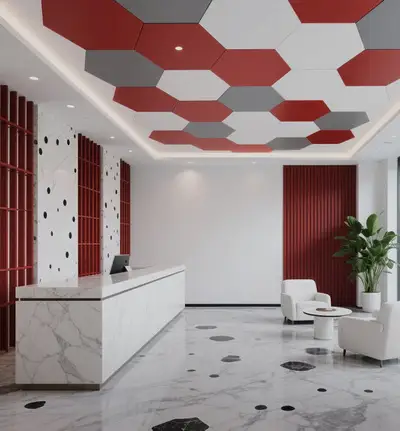
Commercial interior projects require careful planning to create spaces that are visually appealing, functional, and comfortable for everyday use. Offices, hotels, restaurants, educational facilities, retail stores, and conference centers all have different acoustic requirements. Without appropriate sound management, excessive noise and reverberation can affect communication, concentration, customer experiences, and overall comfort. Acoustic panels provide a practical way to address these challenges while complementing modern interior design.
A professional Acoustic Panel Factory supports commercial projects by manufacturing products that combine sound absorption, durability, and design flexibility. Modern production capabilities allow manufacturers to create panels in different materials, shapes, dimensions, and finishes to suit specific architectural requirements. From product selection and customization to quality inspection and delivery, these factories contribute to the successful completion of commercial interior projects.
Understanding the Acoustic Needs of Commercial Spaces
Every commercial environment has its own sound-related challenges. An open-plan office may experience distracting conversations, while a restaurant can become uncomfortable when noise from customers and kitchen activities builds up. Conference rooms may require better speech clarity, and hotels often need acoustic treatments that support a quieter guest experience.
Modern acoustic panel manufacturers help address these needs by offering products designed for different applications. Before selecting panels, project teams should consider:
- Room dimensions and ceiling height.
- Existing wall, floor, and ceiling materials.
- Main sources of unwanted noise.
- Intended room activities and occupancy levels.
- Desired sound absorption performance.
- Interior design requirements and available installation space.
Understanding these factors helps ensure that the selected products are appropriate for the actual environment rather than chosen solely for their appearance.
Providing a Wide Range of Acoustic Panel Solutions
Commercial projects often involve several room types, each requiring a different acoustic treatment. Modern factories manufacture various panel categories to accommodate these requirements.
Common options include:
Fabric-Wrapped Acoustic Panels
These panels combine an absorptive core with a fabric covering. They are widely used in offices, meeting rooms, educational spaces, and hospitality interiors because they offer practical sound absorption and a variety of decorative finishes.
Polyester Fiber Panels
Lightweight polyester fiber products are available in different colors, thicknesses, and shapes. They can be used for wall treatments, ceiling installations, and decorative acoustic features.
Wooden Acoustic Panels
Wood-based acoustic products combine architectural appeal with sound management. Perforated and slatted designs are commonly selected for reception areas, conference rooms, restaurants, and other design-focused environments.
Ceiling Acoustic Panels
Suspended and ceiling-mounted products help manage sound reflections in larger spaces. They are useful in offices, classrooms, dining areas, and commercial buildings with open layouts.
Decorative Acoustic Panels
These products combine functional and visual considerations through geometric patterns, customized shapes, and coordinated finishes. They can help integrate acoustic treatments into a broader interior design concept.
Supporting Customized Commercial Interior Designs
Standard products may not always meet the requirements of commercial architecture. Some projects involve unusual wall dimensions, curved surfaces, specific brand colors, or design concepts that require customized acoustic elements.
Modern manufacturing facilities can produce panels according to project specifications, including:
- Custom lengths, widths, and thicknesses.
- Different fabric colors and surface textures.
- Decorative shapes and patterns.
- Specialized panel arrangements.
- Matching products for walls and ceilings.
- Project-specific mounting configurations.
Customization allows architects and interior designers to incorporate acoustic treatments into their overall design plans. It also helps commercial clients maintain visual consistency across different departments, floors, or business locations.
Improving Production Accuracy Through Modern Technology
Technology plays an important role in contemporary acoustic panel manufacturing. Computer-aided design software, precision cutting equipment, CNC machinery, and automated processing systems help improve accuracy and production efficiency.
These tools allow manufacturers to follow detailed drawings and produce components with consistent dimensions. Precision processing is particularly valuable for projects involving large numbers of panels or complex decorative arrangements.
Digital design tools can also support communication between manufacturers, architects, and contractors. By reviewing drawings and product specifications before production begins, project teams can identify potential issues and make adjustments earlier.
However, advanced equipment must be supported by skilled operators and appropriate quality control procedures to achieve reliable results.
Maintaining Consistent Product Quality
Commercial interior projects often require multiple panels with matching dimensions, colors, materials, and finishes. Inconsistent products can create visible differences across walls and ceilings, affecting the appearance of the completed space.
Professional factories use quality control procedures throughout production to maintain consistency. These may include:
- Inspecting raw materials before manufacturing.
- Checking component dimensions during processing.
- Monitoring assembly and bonding procedures.
- Reviewing surface finishes and color consistency.
- Inspecting completed products before packaging.
- Verifying relevant product specifications and test documentation.
Acoustic performance should also be supported by appropriate testing. Measurements such as sound absorption coefficients and the Noise Reduction Coefficient (NRC) can help buyers understand a panel’s performance under specified laboratory conditions.
The actual acoustic results in a commercial space will also depend on panel coverage, installation methods, room geometry, and existing surfaces.
Helping Offices Create More Comfortable Work Environments
Modern offices often feature open layouts, glass partitions, shared workstations, and collaborative areas. Although these designs can encourage communication, they may also increase sound reflections and background noise.
Acoustic panels can help improve these environments by absorbing sound energy and reducing excessive reverberation. Wall-mounted panels, ceiling treatments, and suspended acoustic elements can be selected according to the room layout.
Meeting rooms may benefit from treatments that improve speech clarity, while open-plan offices may require a combination of ceiling and wall solutions. A manufacturer with different product options can help project teams select suitable panels for each area.
Supporting Hospitality and Retail Interior Projects
Restaurants, hotels, cafés, and retail stores need interiors that attract customers while remaining comfortable and functional.
In restaurants, excessive reverberation can make conversations difficult, particularly during busy periods. Acoustic wall and ceiling panels can help reduce reflected sound and create a more pleasant dining environment.
Hotels may use decorative acoustic treatments in reception areas, guest facilities, meeting rooms, and corridors. Retail stores can incorporate acoustic panels into branded interiors while improving the sound environment.
Factories that offer different materials and finishes make it easier for designers to balance acoustic requirements with the visual identity of a commercial space.
Supporting Large-Scale Projects and Bulk Orders
Commercial developments may require hundreds or even thousands of acoustic panels. Managing these orders involves more than manufacturing individual products. Production planning, material sourcing, quality checks, packaging, and delivery must all be coordinated.
Modern factories can support large projects through organized production scheduling and standardized manufacturing procedures. These processes help maintain consistency across batches and make it easier to coordinate deliveries with construction schedules.
For large orders, project teams should confirm:
- Total quantities and product specifications.
- Approved samples and design drawings.
- Manufacturing and inspection schedules.
- Packaging and labeling arrangements.
- Shipping methods and expected delivery dates.
- Procedures for handling damaged or incorrect products.
Clear coordination helps reduce delays and supports smoother installation.
Providing Technical Information for Better Product Selection
Choosing the right acoustic panel requires more than comparing colors and prices. Commercial project teams need technical information to determine whether a product suits the intended application.
Useful documentation may include material specifications, panel dimensions, thickness, mounting details, acoustic test reports, and relevant fire-performance or emissions information.
The required documentation depends on the building type, local regulations, and project specifications. For example, public buildings, schools, and healthcare environments may have additional requirements concerning fire safety and material emissions.
Manufacturers should provide documentation that relates to the exact product being considered. This allows architects, consultants, and contractors to make decisions based on verified information.
Simplifying Installation and Project Coordination
A well-designed acoustic panel still needs to be installed correctly to achieve its intended function. Modern manufacturers support installation planning by providing product dimensions, mounting recommendations, technical drawings, and relevant accessories where available.
Different panel types may require different installation methods. Fabric-wrapped panels can use mechanical fixings or suitable adhesive systems, while suspended ceiling products may require specialized support arrangements.
Project teams should confirm wall and ceiling conditions, mounting requirements, and installation responsibilities before ordering. For complex commercial projects, coordination with qualified installers and acoustic consultants can help ensure that products are positioned appropriately.
Supporting Sustainable and Efficient Interior Solutions
Sustainability is becoming an increasingly important consideration in commercial construction and interior design. Buyers may want to understand the materials used in acoustic panels, their expected service life, and whether recycled or recyclable components are available.
Some manufacturers offer products made with recycled polyester fibers or other materials intended to support more resource-conscious design choices. However, environmental claims should be supported by relevant product documentation rather than assumed from the material category alone.
Durability is another important factor. Panels that maintain their appearance and structural integrity over time may reduce the need for frequent replacement, helping manage long-term material consumption and maintenance costs.
What Commercial Buyers Should Evaluate When Selecting a Factory
Before choosing a manufacturer, businesses and project professionals should compare several important factors:
| Evaluation Factor | Why It Matters |
|---|---|
| Product range | Provides options for different rooms and applications |
| Customization | Helps meet architectural and branding requirements |
| Material quality | Influences durability and product performance |
| Acoustic testing | Supports informed evaluation of sound absorption |
| Production capacity | Helps accommodate large commercial orders |
| Quality control | Maintains consistency across manufacturing batches |
| Technical support | Assists with product selection and installation planning |
| Delivery reliability | Helps keep construction schedules on track |
Reviewing these areas can help project teams identify manufacturers that are capable of meeting both functional and design requirements.
Conclusion
Modern acoustic panel factories play an important role in commercial interior projects by providing diverse products, customized designs, precision manufacturing, and consistent quality control. Their capabilities help architects, contractors, and business owners address sound-related challenges while maintaining the desired appearance of offices, hospitality venues, retail spaces, and other commercial environments.
Selecting the right manufacturer involves evaluating product materials, acoustic performance, customization options, production capacity, technical documentation, and delivery support. With careful planning and a suitable manufacturing partner, commercial projects can incorporate acoustic solutions that improve indoor comfort, complement interior design, and deliver lasting practical value.