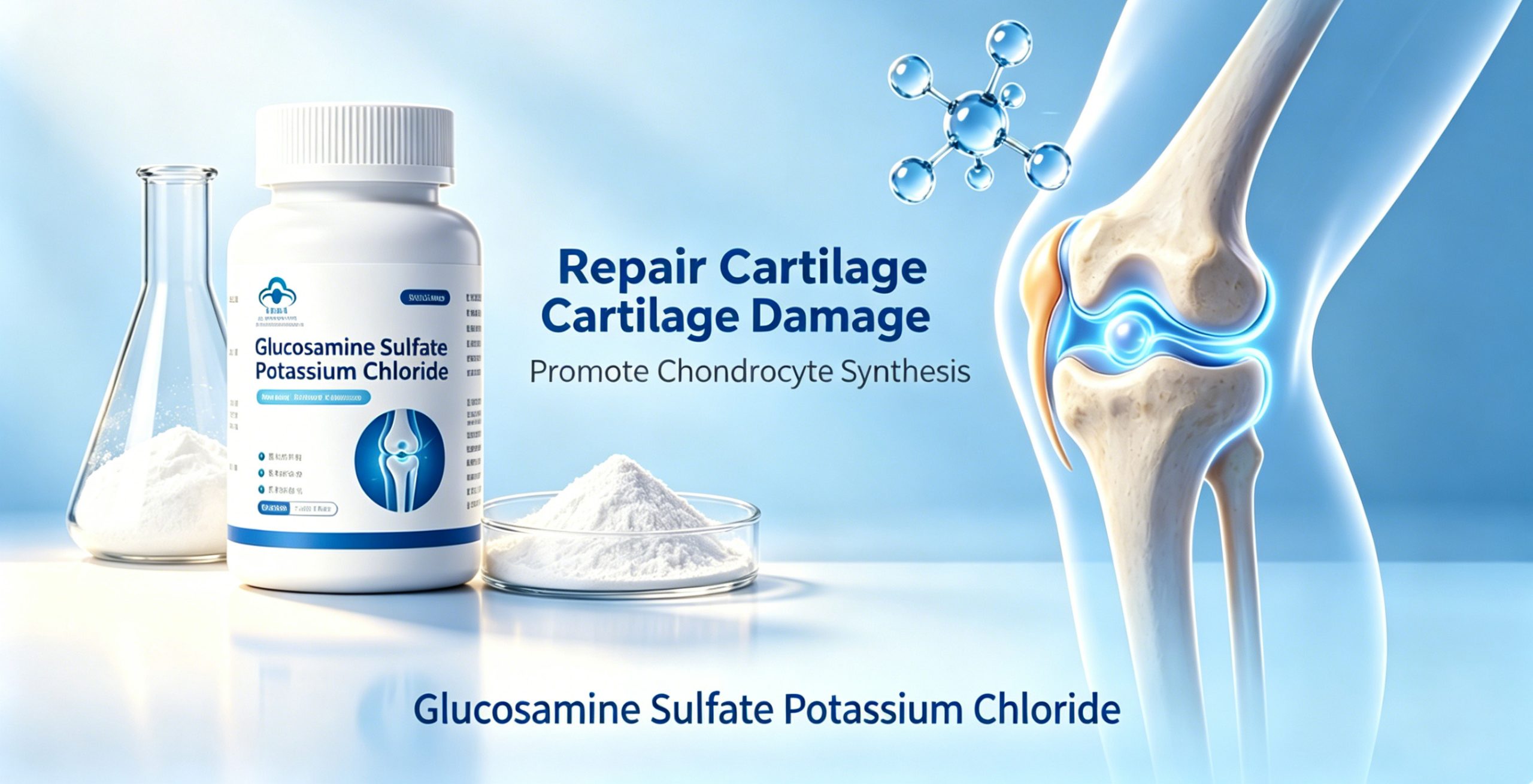
Ingredient quality is a central concern for businesses producing nutritional supplements. A material’s chemical identity, composition, physical characteristics, and documentation determine how it can be used and whether it is suitable for a particular formulation. Glucosamine sulfate 2KCl is an ingredient form used in joint-support supplement products, making specification review and responsible sourcing important considerations for manufacturers.
When evaluating Glucosamine Sulfate 2KCl Powder, manufacturers should consider the ingredient’s composition, quality testing, physical properties, supplier capability, and compatibility with their intended dosage form. A complete assessment helps connect raw material selection with practical production requirements.
Understanding the Powder’s Composition
Glucosamine sulfate 2KCl is a glucosamine sulfate preparation associated with potassium chloride. Its composition should be clearly defined in the supplier’s specification because different glucosamine forms may have different characteristics and reporting conventions.
Manufacturers need to understand what the assay represents and how the ingredient’s content is declared. Formulation calculations should use the appropriate specification basis to determine the quantity required for a target serving.
Accurate calculations are important in both single-ingredient products and multi-component formulations. The final serving weight, dosage form, and manufacturing tolerances may influence the formulation design.
Quality Characteristics to Review
Quality assessment begins with ingredient identification and an approved specification. Relevant parameters may include assay, moisture, impurity limits, microbiological criteria, appearance, and other characteristics appropriate to the material.
The certificate of analysis should be linked to the supplied lot and reviewed by the quality team. Buyers should confirm that the testing methods and reported units are understandable and consistent with the specification.
Additional documents may be required according to the target market and product category. These may include safety information, allergen statements, origin information, manufacturing details, and applicable certification records.
Applications in Nutritional Supplement Products
Glucosamine sulfate 2KCl is commonly used in joint-support supplement formulations. It may be incorporated into capsules, tablets, or powder-based products depending on the manufacturer’s product concept and processing capabilities.
Capsules are useful when the ingredient can be accommodated within the intended capsule size and formulation. Manufacturers may evaluate powder flow, density, particle size, and filling consistency to determine whether the material can be processed efficiently.
Tablets offer opportunities for combining ingredients in a defined dosage form. However, formulation development may need to consider compression behavior, tablet strength, disintegration, and compatibility with excipients.
Powder formats may involve additional formulation considerations, including taste, dispersibility, serving size, and packaging. The complete product must be evaluated rather than assuming that ingredient suitability in one format transfers to another.
Sourcing and Supplier Qualification
Reliable sourcing involves more than obtaining a sample. Buyers should assess manufacturing controls, batch consistency, documentation, production capacity, lead times, and responsiveness.
A supplier should provide clear information about product specifications and be able to explain how quality is maintained. Companies may conduct document reviews, sample evaluations, or other risk-based qualification activities before placing commercial orders.
Supply arrangements should also consider packaging options and shipment conditions. Clear communication about order quantities and delivery schedules can help prevent production interruptions.
Formulation Compatibility
Ingredient properties may influence the behavior of a complete supplement blend. Differences in particle size or density can affect mixing, while moisture characteristics may influence storage or processing.
Manufacturers should perform development trials to determine whether the ingredient is compatible with their chosen excipients and equipment. Testing can identify issues related to blending, capsule filling, tablet compression, or finished-product stability.
Appropriate production procedures should be documented after the formulation has been evaluated.
Storage and Handling Requirements
Storage should follow the manufacturer’s recommendations. Facilities should maintain suitable environmental conditions, protect containers from moisture exposure, and ensure packaging integrity.
Inventory records should include batch identification, receipt dates, storage locations, and applicable shelf-life information. Dispensing procedures should preserve traceability and reduce the risk of ingredient mix-ups.
Integrating Quality With Purchasing Decisions
A successful sourcing strategy combines technical specifications, quality assurance, commercial planning, and regulatory review. Buyers should compare suppliers according to their ability to provide consistent material and relevant support rather than focusing on price alone.
By evaluating glucosamine sulfate 2KCl powder through a documented process, manufacturers can make better-informed ingredient decisions and support the development of nutritional products with controlled specifications and reliable production practices.