

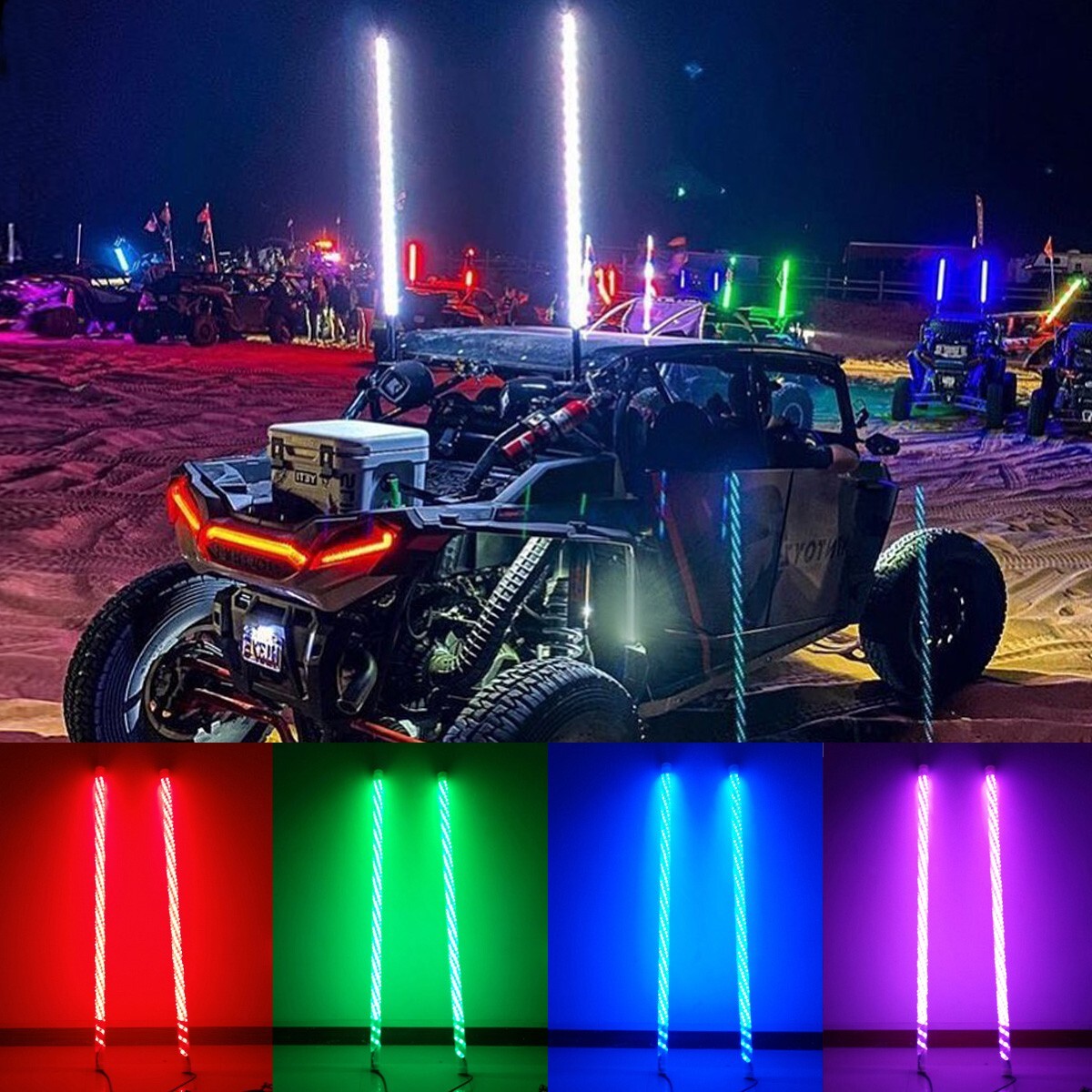
LED whips are lighting accessories designed to improve visibility while adding a distinctive visual element to vehicles and off-road equipment. Their flexible construction and LED illumination make them suitable for applications where a light needs to remain noticeable while handling movement and vibration.
When comparing LED Whips, it helps to understand the differences between construction, colours, control options, and lighting modes. These features can affect how the light looks, how it operates, and whether it is suitable for the environment where it will be installed.
What Are LED Whips?
An LED whip generally combines a flexible shaft with an integrated LED lighting system. The assembly is mounted to a vehicle or other equipment and can produce continuous or changing illumination.
The flexible design allows the whip to move as the vehicle travels over uneven ground. This makes the construction particularly relevant for off-road applications.
Flexible Construction
Flexibility is a key feature of many whip lights. A shaft that can bend and return toward its original position can better accommodate movement caused by rough terrain.
The level of flexibility varies between products. Buyers should consider the construction materials and intended application when comparing different models.
LED Technology
LEDs are commonly used because they can produce strong illumination with relatively low power consumption. They are also available in many colours and configurations.
The quality of the LEDs and supporting electronics can affect brightness, consistency, and overall operating life. Technical specifications can therefore be useful when comparing products.
Available Colours
LED whips can be available in individual colours or multi-colour configurations. Common options include white, red, blue, green, and amber, although the exact selection depends on the model.
Colour can be chosen based on visibility, personal preference, or the intended application. Where a lighting system is used on public roads or for signalling purposes, relevant regulations should also be considered.
Single-Colour Lighting
Single-colour whips provide a consistent visual appearance. They can be suitable when the primary requirement is straightforward illumination without changing effects.
Because there are fewer settings, single-colour systems may also offer simpler operation. This can be useful when a basic lighting arrangement is preferred.
Multi-Colour Options
Multi-colour LED whips provide more flexibility by allowing users to switch between different colours. Some models can display combinations of colours within particular patterns.
This type of system can be useful for recreational or display purposes where changing the appearance of the lighting is desirable.
Common Lighting Modes
Lighting modes determine how the LEDs behave when switched on. Depending on the product, available settings may include:
- Steady illumination
- Flashing patterns
- Fading effects
- Alternating colours
- Sequential lighting
- Strobe-style effects
The number and type of modes can vary considerably between models.
Brightness and Visibility
Brightness is an important specification when the primary purpose is visibility. The required output depends on the environment, mounting position, and distance from which the light needs to be seen.
A very bright light is not automatically the right choice for every situation. Excessive glare may be undesirable, so the intended application should guide the selection.
Control Methods
LED whips can use different control systems. Some are operated with a simple switch, while others use dedicated controllers that provide access to colours, brightness, and lighting patterns.
Wireless or remote controls may also be available on certain models. These can be convenient when the whip is mounted somewhere that is difficult to reach manually.
Power Requirements
Before installation, the electrical specifications should be checked carefully. The whip light needs to be compatible with the vehicle or equipment’s available power supply.
Correct wiring and suitable connections are also important. Installation should follow the manufacturer’s instructions to help ensure reliable operation.
Weather and Environmental Protection
Off-road and outdoor applications can expose lighting equipment to rain, dust, mud, and changing temperatures. A suitable LED whip should have protection appropriate to the environment in which it will be used.
The stated water and dust resistance rating should be reviewed before purchase. Regular cleaning and inspection can also help maintain the condition of the light.
Mounting and Installation
A secure mounting point helps prevent unnecessary movement at the base of the whip. The mounting arrangement should be appropriate for the vehicle and compatible with the supplied hardware.
Cables should also be routed carefully to avoid contact with moving parts, sharp edges, or excessive heat. Good installation practice can contribute to the durability of the complete system.
Choosing the Right LED Whip
When comparing options, consider the following:
- Shaft flexibility and construction
- LED colour options
- Number of lighting modes
- Brightness requirements
- Control method
- Power compatibility
- Weather resistance
- Mounting system
- Cable and connector design
Matching these features to the intended use can make the selection process more straightforward.
Conclusion
LED whips combine flexible construction with LED illumination and a variety of colour and control options. Depending on the model, users can choose from single or multiple colours, steady illumination, flashing effects, and other lighting modes.
The most suitable option depends on the intended environment and purpose. Considering construction, brightness, power requirements, environmental protection, and control features can help buyers select an LED whip that meets their practical requirements.


