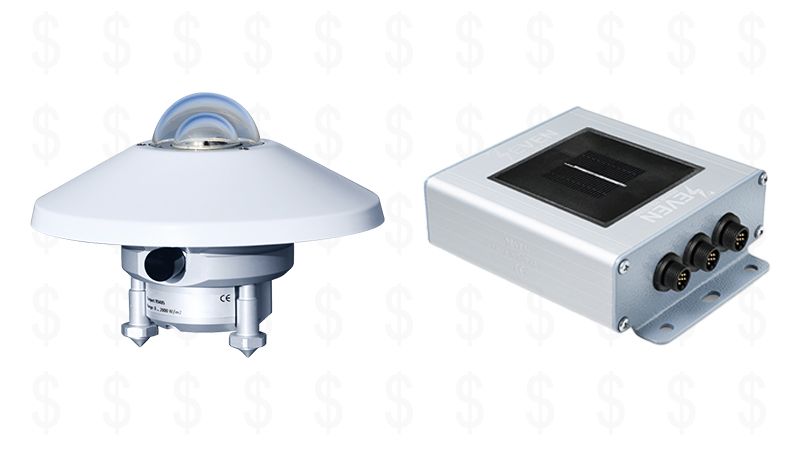
Radiation sensors are essential devices used in various fields, including medical diagnostics, environmental monitoring, industrial safety, and scientific research. These sensors are designed to detect and measure radiation levels, helping to ensure safety, monitor environmental conditions, and collect critical data. Radiation can be broadly classified into ionizing and non-ionizing types, each with unique properties and detection requirements. Understanding how radiation sensors operate is crucial for selecting the right technology for specific applications.
A Radiation Sensor is designed to sense and quantify radiation by converting it into measurable signals. The working principles and technologies vary depending on whether the sensor is detecting ionizing radiation, such as X-rays and gamma rays, or non-ionizing radiation, like ultraviolet (UV) light and radiofrequency waves. These sensors play a vital role in monitoring exposure levels, ensuring compliance with safety standards, and optimizing operational efficiency in applications ranging from solar energy measurement to nuclear facility monitoring.
Detection of Ionizing Radiation
Ionizing radiation consists of high-energy particles or electromagnetic waves capable of removing tightly bound electrons from atoms, creating ions. Examples include alpha particles, beta particles, gamma rays, and X-rays. Radiation sensors designed for ionizing radiation rely on interactions between these high-energy particles and the sensor’s detection medium.
Several technologies are used to detect ionizing radiation. Geiger-Müller (GM) counters are among the most widely known. These sensors use a gas-filled tube where incoming radiation ionizes the gas, producing an electrical pulse that is counted and measured. Scintillation detectors use specialized crystals that emit light when exposed to ionizing radiation. The emitted light is then converted into electrical signals using photomultiplier tubes or photodiodes. Semiconductor detectors use materials like silicon or germanium, where incoming radiation generates electron-hole pairs that produce measurable currents. Each of these detection methods provides high sensitivity, allowing precise measurement of radiation levels.
Detection of Non-Ionizing Radiation
Non-ionizing radiation refers to lower-energy electromagnetic waves that do not carry enough energy to ionize atoms. Examples include ultraviolet (UV) light, visible light, infrared (IR) radiation, microwaves, and radio waves. Sensors for non-ionizing radiation operate on different principles compared to ionizing radiation detectors.
For instance, photodiodes and photovoltaic sensors are commonly used for detecting UV, visible, and IR radiation. These devices convert light energy directly into an electrical current, which can be measured and quantified. Thermal detectors, such as bolometers and thermopiles, sense non-ionizing radiation by detecting changes in temperature caused by absorbed radiation. Antenna-based sensors are employed for radiofrequency and microwave detection, where the electromagnetic wave induces a current in the antenna that is proportional to the radiation intensity. These sensors are essential in applications like solar energy monitoring, telecommunications, and environmental studies.
Calibration and Accuracy
Regardless of the type of radiation, calibration is critical for accurate measurements. Radiation sensors must be periodically calibrated using reference sources or standard instruments to ensure that their readings are precise. Calibration factors account for sensor sensitivity, environmental conditions, and operational characteristics. Regular calibration is particularly important in medical, industrial, and research applications, where precise radiation measurement is essential for safety and data integrity.
Integration with Monitoring Systems
Modern radiation sensors are often integrated with monitoring and data acquisition systems to provide continuous, real-time measurements. In ionizing radiation applications, such systems alert operators to unsafe exposure levels and enable automated safety protocols. In non-ionizing radiation applications, integrated sensors help optimize energy usage, track environmental conditions, and monitor compliance with regulatory limits. For example, in solar energy systems, radiation sensors measure solar irradiance, allowing efficient tracking of photovoltaic panel performance and energy yield.
Environmental and Safety Applications
Radiation sensors play a crucial role in environmental monitoring and safety. Ionizing radiation detectors are employed in nuclear power plants, laboratories, and hospitals to protect personnel and ensure regulatory compliance. Non-ionizing radiation sensors are used to monitor UV exposure in outdoor environments, optimize solar energy installations, and measure electromagnetic emissions from communication devices. By providing accurate and timely data, these sensors help mitigate risks, improve efficiency, and support informed decision-making.
Future Trends in Radiation Sensing
Advancements in radiation sensor technology are focusing on higher sensitivity, compact design, wireless connectivity, and multi-parameter detection. Next-generation sensors are expected to offer real-time data transmission, AI-assisted analytics, and integration with smart monitoring networks. These innovations will expand applications in healthcare, environmental monitoring, renewable energy, and industrial safety, making radiation sensing more accessible, efficient, and precise.
Conclusion
Radiation sensors are versatile tools that detect and quantify both ionizing and non-ionizing radiation. Ionizing radiation is detected through interactions that produce ionization in gases, scintillation in crystals, or electron-hole pairs in semiconductors. Non-ionizing radiation is measured using photodiodes, thermal sensors, and antenna-based systems. Proper calibration, integration with monitoring systems, and application-specific selection ensure reliable and accurate measurements. By advancing safety, efficiency, and data collection, radiation sensors continue to be essential instruments across healthcare, environmental monitoring, solar energy, and industrial applications.