Modern businesses face increasing pressure to improve production efficiency, maintain product quality, control operating costs, and meet customer delivery expectations. While manufacturers often focus on optimizing production and primary packaging processes, the final packaging stage is equally important. Activities such as carton forming, product packing, case sealing, labeling, palletizing, and wrapping determine how efficiently finished goods are prepared for storage and transportation.
End of Line Packaging Automation provides an effective way to organize these final operations through interconnected machinery and automated control systems. By reducing repetitive manual tasks and improving coordination between packaging stations, businesses can create more reliable production workflows. Understanding the benefits of this technology helps manufacturers determine how automation can support their operational goals and long-term growth.
Understanding End-of-Line Packaging Automation
End-of-line packaging automation refers to the use of machinery to perform the final packaging activities after products have been manufactured and primary packaging has been completed.
These systems prepare finished products for shipment by performing tasks such as:
- Forming and preparing empty cartons.
- Grouping individual products into specific quantities.
- Loading products into shipping cases.
- Closing and sealing cartons.
- Applying shipping labels and identification codes.
- Arranging cartons onto pallets.
- Wrapping pallet loads for transportation.
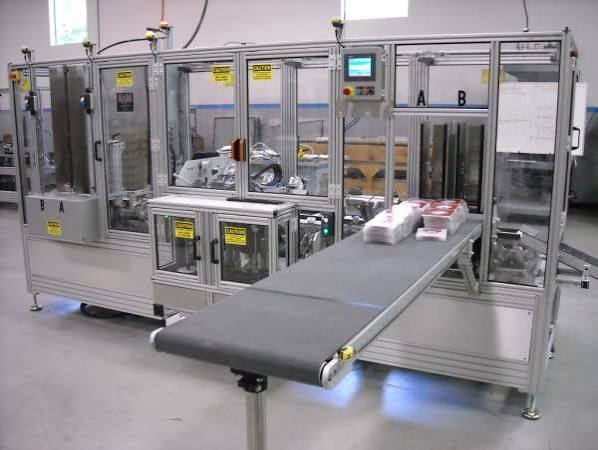
Depending on production requirements, a system may contain several machines connected through conveyors and controlled by programmable automation systems.
The main purpose is to create a coordinated process that moves finished products from the production area to the warehouse with fewer manual interruptions.
1. Higher Production Efficiency
One of the most important benefits of end-of-line automation is improved production efficiency.
Manual packaging operations often require employees to complete repetitive activities, including folding cartons, arranging products, sealing boxes, and stacking packages. These tasks can become bottlenecks when manufacturing output increases.
Automated equipment performs repetitive operations at controlled speeds and helps maintain a more consistent workflow.
For example, an automatic case erector can prepare cartons while a connected case packing machine loads finished products. The cartons can then move directly to sealing and palletizing stations.
This coordination reduces unnecessary waiting between packaging stages and helps manufacturers process larger quantities more efficiently.
2. Reduced Labor Requirements
Manual end-of-line packaging requires employees to perform several physical activities throughout the production shift.
As order volumes increase, businesses may need additional workers to handle packing, carton preparation, sealing, and pallet stacking.
Automation reduces the need for direct human involvement in many repetitive tasks.
Robotic palletizers can arrange cartons onto pallets, while automatic case packers handle product loading and carton sealing equipment closes packages without continuous manual intervention.
Employees can focus on equipment supervision, quality checks, material preparation, and maintenance activities.
This allows businesses to use their workforce more effectively while reducing the physical demands associated with repetitive packaging work.
3. Improved Packaging Consistency
Maintaining uniform packaging quality is important for product presentation, protection, and transportation.
Manual packaging may produce variations in carton arrangement, sealing quality, and pallet stacking because employees perform tasks at different speeds and according to individual techniques.
Automated equipment follows programmed operating settings and repeatable mechanical movements.
For example, automatic carton sealing machines apply tape or adhesive consistently, while palletizers follow predefined stacking patterns.
This helps manufacturers produce more standardized shipping packages and reduces certain packaging inconsistencies.
4. Better Product Protection
Finished products can experience vibration, movement, pressure, and repeated handling during transportation.
Poorly sealed cartons or unstable pallet loads may increase the risk of product damage before goods reach customers.
End-of-line automation helps improve product protection through controlled packing and wrapping processes.
Case packing equipment positions products inside cartons according to defined arrangements. Sealing machines secure the boxes, while stretch wrapping systems stabilize palletized loads.
Manufacturers can also select suitable carton designs, protective inserts, and handling methods according to product requirements.
These measures help maintain product condition throughout storage and distribution.
5. Improved Workplace Safety
Repetitive lifting, bending, carrying, and stacking can place considerable physical demands on packaging employees.
These activities may contribute to fatigue and increase the risk of workplace injuries, particularly in facilities handling heavy cartons or operating multiple shifts.
Automated case packing and palletizing equipment reduce the need for employees to perform many repetitive handling tasks.
Conveyor systems also transport products between stations, minimizing unnecessary carrying and movement.
However, automated machinery must be installed with suitable protective guards, emergency stops, safety sensors, and operator training to maintain a safe working environment.
6. Faster Carton Packing and Sealing
Carton preparation and sealing are essential parts of final packaging. When these activities are performed manually, production speed may depend on employee availability and working conditions.
Automatic case erectors form flat cardboard blanks into cartons, while case packing machines load products into the prepared boxes.
Carton sealing equipment then closes and secures the packages using tape or adhesive.
Connecting these machines allows manufacturers to reduce delays between packaging activities.
Faster and more consistent carton processing can help businesses meet production schedules and prepare finished goods for dispatch more efficiently.
7. More Efficient Palletizing Operations
Palletizing is the process of arranging packaged products onto pallets for storage and transportation.
Manual palletizing can be physically demanding and time-consuming, particularly when cartons are heavy or production volumes are high.
Automatic palletizers use mechanical systems or robotic arms to arrange cartons according to predefined patterns.
These systems can help create organized pallet loads with consistent stacking arrangements.
A stable pallet configuration makes it easier to move finished products using forklifts and warehouse handling equipment.
Automated palletizing also reduces repetitive lifting and helps manufacturers maintain a more predictable packaging workflow.
8. Lower Packaging Waste
Packaging materials represent an important operating expense for manufacturers.
Inconsistent manual operations may result in damaged cartons, incorrectly applied tape, excessive wrapping film, or unsuitable product arrangements.
Automated equipment can help reduce certain types of waste by controlling how packaging materials are handled and applied.
For example, automatic carton formers create boxes according to specified dimensions, while stretch wrapping machines regulate film application based on load requirements.
Accurate product grouping and packing can also reduce unnecessary packaging adjustments.
Actual material savings depend on equipment configuration, packaging specifications, operator practices, and maintenance quality.
9. Better Warehouse Organization
The benefits of end-of-line automation extend beyond the packaging department.
Finished products must be organized before entering storage or distribution. Inconsistent carton sizes, poorly stacked pallets, and missing identification information can create warehouse management difficulties.
Automated palletizing systems create more uniform loads, while labeling equipment can apply shipping information and barcodes.
When integrated with warehouse management systems, these processes can support product identification, inventory tracking, and organized storage.
This helps improve coordination between manufacturing, packaging, and warehouse departments.
10. Greater Production Capacity and Scalability
Businesses often experience changing demand as their customer base and product range expand.
Manual packaging operations may require additional employees and workstations to handle increased output.
Automated systems provide alternative ways to increase capacity through equipment upgrades, additional packaging stations, or longer operating schedules.
Modular packaging equipment can be particularly useful because manufacturers can expand selected operations without replacing the entire system.
For example, a business may initially automate carton sealing and later add automatic case packing and robotic palletizing as production requirements increase.
Planning for scalability helps businesses prepare for future growth.
11. Reduced Packaging Bottlenecks
A packaging bottleneck occurs when one operation cannot process products at the same rate as the preceding production stage.
For example, finished products may accumulate if a case packing station operates more slowly than the filling or labeling equipment.
Automated end-of-line systems help reduce these issues by coordinating machine speeds and product movement.
Conveyors, sensors, and programmable logic controllers help regulate the flow of products between connected stations.
Proper equipment sizing and synchronization are essential to prevent one machine from limiting the performance of the entire production line.
12. Improved Product Identification and Traceability
Accurate product identification is important for inventory management, distribution, and quality control.
Automated labeling and coding equipment can apply batch numbers, production dates, expiration information, shipping labels, and barcodes.
These details help businesses identify products and track them through different stages of the supply chain.
When connected with production or warehouse management software, packaging systems can also support better recordkeeping and product traceability.
This is especially useful in industries where accurate identification and documentation are important.
13. More Effective Quality Control
Packaging defects can affect product protection, customer satisfaction, and manufacturing costs.
Common problems include damaged cartons, incorrect labels, missing components, and improperly sealed packages.
Modern end-of-line systems can integrate inspection technologies to identify certain defects before finished goods reach the warehouse.
Examples include:
- Checkweighers for verifying package weight.
- Barcode scanners for checking identification information.
- Machine vision systems for inspecting package appearance.
- Metal detectors for identifying certain metallic contaminants.
- Seal inspection equipment for evaluating closure quality.
These technologies help manufacturers identify problems earlier and reduce the risk of defective products moving into distribution.
14. Improved Production Planning and Monitoring
Automated equipment can provide valuable information about packaging performance.
Depending on the control and monitoring systems installed, manufacturers may collect data on production quantities, operating speeds, downtime, rejection rates, and equipment status.
Managers can use this information to evaluate production performance and identify areas that need improvement.
For example, frequent interruptions at the palletizing station may indicate that its capacity is insufficient for the upstream packing equipment.
Monitoring production data helps businesses make better decisions about machine settings, maintenance schedules, and capacity planning.
15. Better Long-Term Cost Management
Although automated packaging systems require an initial investment, they may provide financial advantages over time when matched with suitable production requirements.
Potential savings may come from reduced repetitive labor, lower material waste, improved production throughput, and fewer packaging-related interruptions.
However, manufacturers must also consider ongoing expenses such as electricity, maintenance, spare parts, software, and technical support.
A proper cost evaluation should compare the total cost of ownership with the expected operational benefits.
This approach helps businesses understand whether automation is financially suitable for their production environment.
Industries That Benefit from End-of-Line Packaging Automation
Several industries use automated final packaging systems to improve product handling and prepare finished goods for distribution.
Food and Beverage
Food and beverage manufacturers use case packers, carton sealers, shrink wrappers, and palletizers to handle bottles, cans, jars, cartons, and packaged food products.
Automation helps support high production volumes and consistent packaging procedures.
Pharmaceutical Manufacturing
Pharmaceutical companies require accurate packaging and identification processes.
Automated case packing, labeling, coding, and palletizing equipment can support efficient product handling while helping businesses meet applicable industry requirements.
Cosmetics and Personal Care
Cosmetic manufacturers use end-of-line equipment to pack bottles, tubes, jars, and other products into shipping cartons.
Consistent packaging presentation and careful product handling are important considerations.
Chemical Manufacturing
Chemical manufacturers may use automated systems to handle bags, drums, containers, and other industrial packaging formats.
Equipment selection must account for product characteristics, packaging strength, handling requirements, and workplace safety.
Consumer Goods
Producers of household products, electronics accessories, and other consumer goods use automated packing and palletizing equipment to prepare large quantities of finished products for distribution.
Factors to Consider Before Investing in Automation
Although end-of-line automation offers several advantages, manufacturers should evaluate their requirements before selecting equipment.
Important considerations include:
Production volume: Determine the number of products and cartons that need to be processed per hour.
Product characteristics: Consider product size, shape, weight, fragility, and handling requirements.
Packaging materials: Evaluate carton dimensions, material strength, sealing requirements, and compatibility with machinery.
Factory layout: Ensure that sufficient space is available for equipment, conveyors, operators, and maintenance access.
Equipment compatibility: Confirm that new machinery can operate effectively with existing production systems.
Maintenance support: Review spare parts availability, servicing requirements, and technical assistance.
Future expansion: Select equipment that can accommodate expected changes in production capacity or packaging formats.
Careful planning helps manufacturers choose systems that deliver practical benefits without unnecessary complexity.
Conclusion
End-of-line packaging automation offers modern businesses an effective way to improve final production operations. By automating carton forming, case packing, sealing, labeling, palletizing, and wrapping, manufacturers can increase efficiency, reduce repetitive labor, improve packaging consistency, and prepare finished goods for distribution more effectively.
Additional benefits include better workplace safety, reduced packaging waste, improved warehouse organization, and greater opportunities for production expansion. However, successful implementation depends on selecting appropriate machinery, ensuring system compatibility, and maintaining equipment properly.
Businesses should evaluate their production requirements and long-term objectives before investing in automated packaging solutions. For manufacturers exploring integrated equipment and modern packaging systems, Techflow Pack can be a useful reference when considering ways to improve final packaging operations and support business growth.