Modern security and imaging systems rely on precise and stable signal transmission to deliver clear video and data output. One of the most important components in these systems is the connector that links cameras to cables, recording devices, and monitoring equipment. These small but essential parts ensure uninterrupted communication between devices and play a major role in overall system performance.
Different camera technologies require different connector types depending on signal format, resolution, and transmission method. Choosing the right connector helps improve reliability, reduce interference, and maintain consistent image quality.
A high-quality camera cable connector is widely used in surveillance and imaging setups because it provides secure connectivity, stable signal transmission, and long-term durability across various environments.
BNC Connectors for CCTV Systems
BNC connectors are among the most commonly used connectors in analog and HD-over-coax CCTV systems. They are designed for coaxial cable transmission and provide a secure locking mechanism.
Key features:
- Twist-and-lock design for secure fitting
- Stable analog and HD video transmission
- Widely compatible with DVR systems
- Easy installation and removal
BNC connectors are commonly used in HD-TVI, HD-CVI, AHD, and traditional analog surveillance systems.
RCA Connectors for Basic Video Applications
RCA connectors are simple plug-style connectors often used in older or basic video systems. While not as robust as BNC connectors, they are still used in certain low-complexity setups.
Key features:
- Simple push-in connection
- Suitable for basic video transmission
- Common in legacy systems
- Limited interference protection
They are generally found in non-professional or older surveillance configurations.
RJ45 Connectors for IP Camera Systems
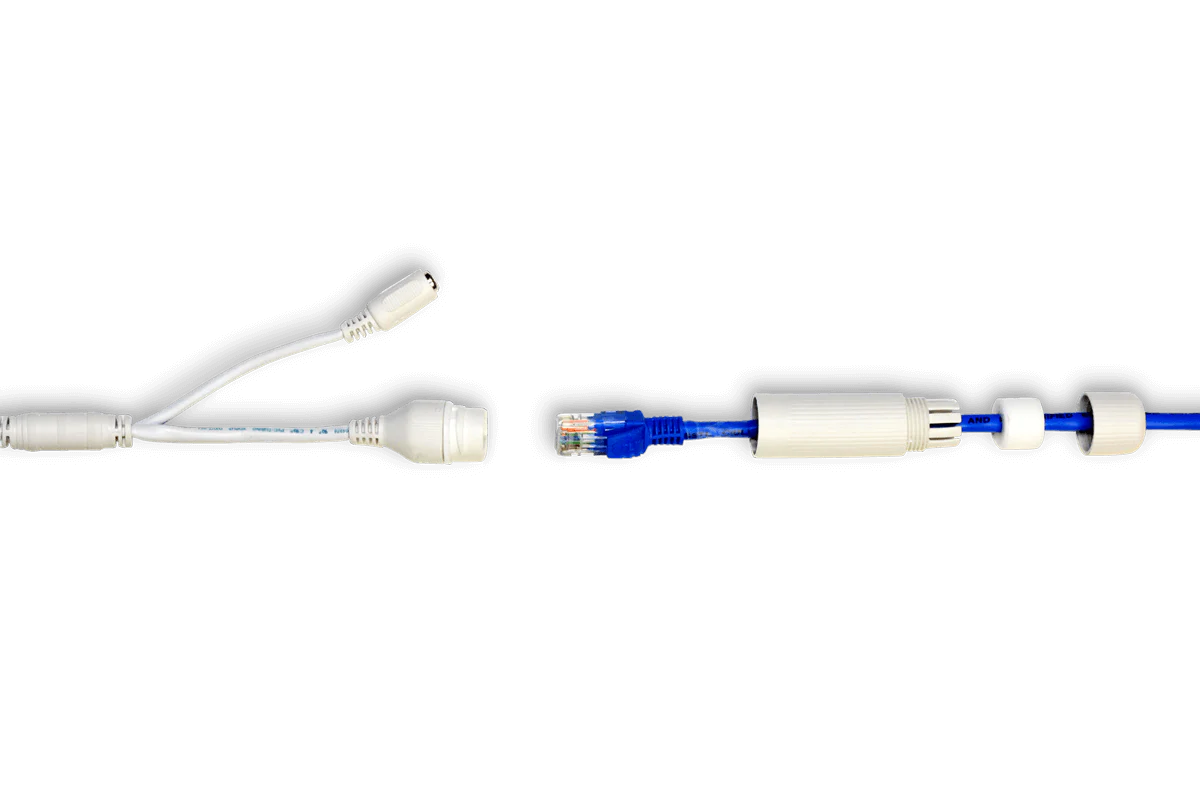
RJ45 connectors are widely used in modern IP-based camera systems. These connectors support digital data transmission over Ethernet cables and are essential for network surveillance setups.
Key features:
- Supports high-speed data transfer
- Compatible with PoE (Power over Ethernet)
- Used in IP camera networks
- Enables remote monitoring and access
RJ45 connectors are essential for smart surveillance systems that rely on network connectivity.
HDMI Connectors for High-Resolution Video Output
HDMI connectors are used in imaging and monitoring systems that require high-definition video output. They are commonly found in control rooms and advanced surveillance displays.
Key features:
- Supports high-definition and 4K video
- Digital signal transmission
- High-quality image clarity
- Used for direct display connections
These connectors are not typically used for cameras directly but for output to monitors and display systems.
DIN Connectors in Specialized Systems
DIN connectors are used in specific industrial or professional imaging applications. They provide multi-pin connections for more complex signal requirements.
Key features:
- Multi-pin configuration
- Strong mechanical durability
- Used in specialized imaging equipment
- Suitable for industrial environments
They are often found in systems requiring multiple signal channels in a single connection.
Coaxial Connectors for High-Frequency Transmission
Coaxial connectors are designed for stable high-frequency signal transmission. They are widely used in both security and broadcasting applications.
Key features:
- Excellent shielding against interference
- Reliable long-distance transmission
- Used in high-frequency applications
- Strong signal integrity
These connectors help maintain video quality in demanding environments.
Fiber Optic Connectors for Advanced Imaging Systems
Fiber optic connectors are used in high-performance imaging and surveillance systems that require extremely fast and interference-free data transmission.
Key features:
- Extremely high data transmission speed
- Immunity to electromagnetic interference
- Suitable for long-distance communication
- Used in advanced security networks
They are ideal for large-scale surveillance systems and critical infrastructure monitoring.
Importance of Choosing the Right Camera Cable Connector
Selecting the correct connector is essential for ensuring system efficiency and reliability. Each connector type serves a specific purpose depending on the camera technology and installation environment.
Key considerations include:
- Compatibility with camera system type
- Signal transmission requirements
- Environmental conditions
- Installation complexity
- Long-term durability
Using the wrong connector can lead to poor video quality, signal loss, or system failure.
Factors That Affect Connector Performance
Several factors influence how well a connector performs in real-world conditions.
These include:
- Material quality and conductivity
- Shielding effectiveness
- Environmental exposure
- Installation quality
- Cable compatibility
Proper selection and installation help maximize system performance.
Conclusion
Camera cable connectors are essential components in both security and imaging systems, ensuring stable and reliable signal transmission between devices. From BNC and RJ45 connectors to fiber optic and HDMI types, each connector serves a specific role depending on system requirements.
Understanding the different types of connectors helps users choose the right solution for their surveillance or imaging setup. A properly selected and installed connector ensures clear video output, improved system stability, and long-term operational reliability.