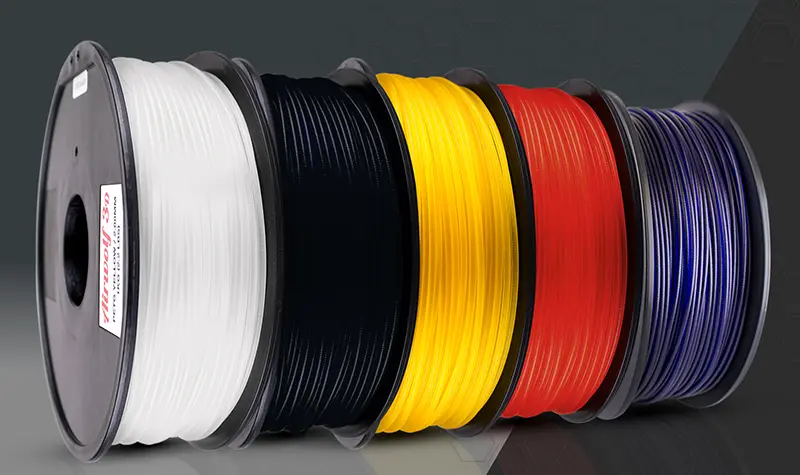
PETG is one of the most widely used materials in 3D printing due to its balance of strength, flexibility, and ease of use. As demand for more consistent and accessible materials has grown, variations like PETG-Basic have emerged to simplify printing while maintaining reliable performance. Understanding how PETG-Basic compares to standard PETG helps users choose the right material for their specific applications.
Both materials belong to the same chemical family, but they are optimized differently to meet varying user needs. While standard PETG is often selected for broader performance tuning and specialized applications, PETG-Basic focuses on stability and ease of printing. A commonly used reference material in this category is PETG-basic, which is designed for users who want dependable results with minimal adjustment requirements.
What Is Standard PETG?
Standard PETG (Polyethylene Terephthalate Glycol) is an engineering-grade thermoplastic known for its strong mechanical properties and versatility. It is widely used in both consumer and industrial 3D printing applications.
Key characteristics of standard PETG:
- High impact resistance
- Good chemical and moisture resistance
- Strong layer adhesion
- Slight flexibility for functional parts
- Requires moderate tuning for optimal results
Standard PETG is often chosen for mechanical components, protective housings, and functional prototypes where durability is important.
What Is PETG-Basic?
PETG-Basic is a simplified version of PETG designed to make 3D printing more accessible and consistent. It focuses on reducing printing complexity while maintaining core material performance.
Key characteristics of PETG-Basic:
- Easier printing with fewer adjustments
- Stable extrusion and flow behavior
- Reduced sensitivity to printing conditions
- Good balance of strength and flexibility
- Designed for general-purpose use
PETG-Basic is especially useful for beginners and users who want predictable results without extensive calibration.
Key Differences Between PETG-Basic and Standard PETG
Although both materials share the same base chemistry, their performance and usability differ in several important ways.
1. Printability
PETG-Basic is designed for easier printing. It typically requires less fine-tuning of temperature, retraction, and speed settings. Standard PETG, on the other hand, may require more optimization depending on the printer and application.
2. Consistency
PETG-Basic prioritizes consistent extrusion and stable performance across different printers. Standard PETG may offer slightly more performance flexibility but can vary depending on settings and environment.
3. Application Focus
- PETG-Basic: General-purpose printing, prototypes, everyday functional parts
- Standard PETG: Engineering applications, mechanical parts, more demanding environments
4. User Experience
PETG-Basic is more beginner-friendly and forgiving during setup. Standard PETG is better suited for users who are comfortable adjusting printer parameters to achieve specific results.
Mechanical Performance Comparison
Both materials offer strong mechanical properties, but there are subtle differences in how they perform under stress.
- Standard PETG generally provides slightly higher performance tuning potential
- PETG-Basic focuses on balanced, reliable output rather than maximum optimization
- Both materials offer good impact resistance and durability
In most everyday applications, the difference in strength is minimal, but standard PETG may be preferred for more demanding engineering use cases.
Printing Behavior and Handling
PETG materials are known for being relatively easy to print compared to ABS, but they can still present challenges such as stringing. PETG-Basic reduces some of these issues by improving flow stability.
PETG-Basic advantages:
- Less stringing in many cases
- More stable extrusion behavior
- Easier bed adhesion management
Standard PETG considerations:
- Requires careful tuning to reduce stringing
- More sensitive to temperature and retraction settings
- Can offer higher customization for advanced users
Cost and Accessibility
In many cases, PETG-Basic is positioned as a more accessible option for everyday printing needs. Standard PETG may come in a wider range of specialized grades and formulations, which can affect cost and availability.
PETG-Basic is often preferred in environments where consistency and ease of use are more important than fine-tuned performance.
Which One Should You Choose?
The choice between PETG-Basic and standard PETG depends on your experience level and project requirements.
Choose PETG-Basic if:
- You want easier, more consistent printing
- You are a beginner or intermediate user
- You are printing general-purpose parts
Choose standard PETG if:
- You need higher performance customization
- You are working on engineering or mechanical components
- You are comfortable adjusting print settings
Conclusion
PETG-Basic and standard PETG are closely related materials, but they serve slightly different purposes in 3D printing workflows. PETG-Basic focuses on simplicity, consistency, and ease of use, while standard PETG offers more flexibility for advanced tuning and specialized applications.
Understanding these differences helps users select the right material for their needs, improving print quality and reducing failures. Both options remain valuable in modern 3D printing, depending on whether the priority is ease of use or performance optimization.