A swimming pool can provide hours of enjoyment for families, from weekend relaxation to exercise and playtime with children. However, keeping everyone safe requires careful planning, appropriate safety equipment, and consistent supervision. Even experienced swimmers can encounter unexpected situations, making it important to prepare for emergencies and reduce preventable risks.
Choosing the right swimming pool equipment and supplies is one part of creating a safer swimming environment. Pool barriers, rescue equipment, alarms, and first-aid supplies can support a family’s overall safety plan when used correctly. Understanding the purpose of each item helps pool owners make informed decisions and prioritize the measures that offer meaningful protection.
Why Swimming Pool Safety Matters for Families
Swimming pools present several potential hazards, including accidental falls, drowning, slippery surfaces, and injuries caused by improper equipment use. Young children are particularly vulnerable because they may enter the pool area without recognizing the dangers.
A safe swimming environment depends on multiple layers of protection rather than a single product. Physical barriers, active adult supervision, swimming skills, emergency preparation, and properly maintained equipment all play important roles.
Families should establish clear pool rules and make sure everyone understands them. Children should never be left unattended near water, even when they can swim or when safety devices are installed.
1. Pool Fencing and Secure Gates
A suitable pool barrier is one of the most important safety features for a residential swimming pool. It helps prevent unsupervised access, particularly when children are playing nearby or adults are occupied with other activities.
Choosing the Right Pool Fence
Pool fencing should be durable, appropriately positioned, and designed to prevent children from climbing over, crawling under, or passing through openings. The required height, spacing, and construction depend on local regulations.
Common options include metal fencing, glass barriers, and other approved barrier systems. The best choice depends on the property’s layout, weather conditions, maintenance requirements, and applicable safety standards.
Gate Safety Features
Pool gates should meet local requirements and generally need self-closing and self-latching mechanisms. Where required, latches should be positioned to limit access by young children.
Inspect gates regularly to confirm they close and latch properly. Keep furniture, toys, and other objects away from the fence so children cannot use them to climb into the pool area.
A fence should surround the pool appropriately and should not rely on a house door or informal boundary as the only protection unless that arrangement meets local safety requirements.
2. Pool Covers and Safety Covers
Pool covers help keep debris out of the water and can reduce evaporation. Certain specially designed safety covers also provide an additional physical barrier when the pool is not in use.
Understanding Different Pool Covers
Solar covers are primarily intended to retain heat and reduce water evaporation. They are not designed to prevent a child from falling into the pool.
Winter covers protect pools during seasonal shutdowns, while automatic covers can make opening and closing a compatible pool more convenient.
A certified safety cover is specifically designed to meet defined safety requirements. Before purchasing one, verify its intended use, load specifications, installation requirements, and compliance with applicable standards.
Safe Cover Practices
Always follow the manufacturer’s instructions when opening, closing, securing, and inspecting a cover. Remove standing water where the design requires it, and prevent children from playing on or around the cover.
No cover should replace secure pool barriers or active supervision. Even a safety cover must be used as intended to provide its designed level of protection.
3. Rescue Equipment for Pool Emergencies
Accessible rescue equipment can help an adult respond more effectively if someone experiences difficulty in the water. These items should be stored near the pool in a clearly identified location.
Reaching Poles
A reaching pole allows a person outside the pool to extend assistance to someone in the water without entering it. Choose a pole that is long enough for the pool’s dimensions and suitable for the intended purpose.
Inspect the pole periodically for cracks, damaged fittings, or other defects that could affect its reliability.
Appropriate Rescue Flotation Devices
A suitable rescue flotation device can provide support to someone in distress. Select equipment intended for water rescue rather than assuming an ordinary pool toy or inflatable accessory will provide dependable emergency assistance.
Family members should understand where rescue equipment is kept and how to access it quickly. When an emergency occurs, call local emergency services and follow the instructions of trained responders.
If you are not trained to perform an in-water rescue, avoid entering the water and placing yourself at risk. Reach or throw appropriate rescue equipment from a safe position whenever possible.
4. Pool Alarms and Monitoring Devices
Pool alarms can provide an additional warning when certain types of activity occur around or in the pool. They may detect water disturbance, movement through a designated entry point, or other conditions, depending on their design.
Common options include surface-wave alarms, subsurface disturbance alarms, and gate or door alarms. Some systems can also send notifications to compatible devices.
Selecting a Suitable Alarm
Before purchasing an alarm, consider the pool’s design, the type of protection offered, the manufacturer’s stated limitations, and compatibility with the installation.
An alarm should be tested according to the manufacturer’s schedule to confirm that it is functioning correctly. Batteries, sensors, and other components may require periodic inspection or replacement.
Alarms are an additional safety measure, not a substitute for fencing, secure gates, close supervision, or other required precautions. A warning device may not activate in every dangerous situation, so families should never depend on it as their primary protection.
5. First-Aid Kits and Emergency Supplies
Keeping a well-stocked first-aid kit near the pool helps families respond to minor injuries while arranging appropriate medical assistance when necessary.
A poolside kit may include adhesive dressings, sterile gauze, bandages, disposable gloves, antiseptic products suitable for first aid, and emergency contact information. Store supplies in a dry, accessible container and check expiration dates regularly.
A first-aid kit does not replace emergency medical care. Families should know how to contact local emergency services and understand the location of the nearest available telephone.
CPR Knowledge Is Essential
Adults responsible for children around a pool should consider taking recognized CPR and water-safety training. In a drowning emergency, prompt action can be critical.
Learn how to recognize a person in distress, call for emergency assistance, and provide appropriate CPR according to current training. If someone is unresponsive and not breathing normally, contact emergency services and begin CPR as directed by your training or the emergency dispatcher.
Consider keeping emergency instructions and the property’s exact address readily available for visitors and caregivers.
6. Non-Slip Surfaces and Safe Pool Access
Wet pool decks, steps, ladders, and surrounding walkways can become slippery. Appropriate surface materials and well-maintained access equipment help reduce the risk of falls.
Pool Decking
Choose decking materials designed for wet environments and appropriate for the local climate. The surface should provide suitable traction without creating excessive maintenance problems.
Inspect the surrounding area for loose tiles, uneven paving, standing water, algae, or damaged surfaces. Address these hazards promptly and keep walkways clear of toys, hoses, and cleaning equipment.
Ladders, Steps, and Handrails
Pool ladders and handrails should be securely installed and maintained according to the manufacturer’s instructions. Check for loose fittings, corrosion, sharp edges, and damaged surfaces.
Teach children to use designated entry and exit points rather than climbing over pool barriers or using equipment in unintended ways.
Adequate lighting around steps and access routes can also improve visibility when the pool area is used during evening hours.
7. Proper Pool Lighting and Electrical Safety
Lighting helps swimmers see steps, edges, and other features when using a pool in low-light conditions. Suitable underwater and surrounding lights can improve visibility, but electrical installations near water require particular care.
Pool lighting should be designed for the intended wet environment and installed according to applicable electrical codes. Electrical equipment must have the required protective devices, grounding, and bonding.
Never use damaged electrical equipment near the pool, and avoid handling electrical devices while standing in water or on wet surfaces. Have qualified professionals inspect or repair underwater lights, wiring, pumps, and other electrical components.
Families should also establish rules about using portable electronics, extension cords, and other electrical products near the water.
8. Child-Friendly Pool Safety Accessories
Families with young children may benefit from additional equipment that supports supervision and safe pool use. However, accessories should never create a false sense of security.
Age-appropriate swimming lessons can help children develop water confidence and swimming skills. Lessons should be selected according to the child’s abilities and should not be treated as protection against drowning.
Approved life jackets or personal flotation devices may be appropriate for certain activities and users, particularly when recommended for the specific setting. Choose the correct size and type, and follow the manufacturer’s instructions.
Inflatable rings, water wings, pool noodles, and similar toys are not reliable drowning-prevention devices. Children should remain within close, attentive adult supervision whenever they are in or near the water.
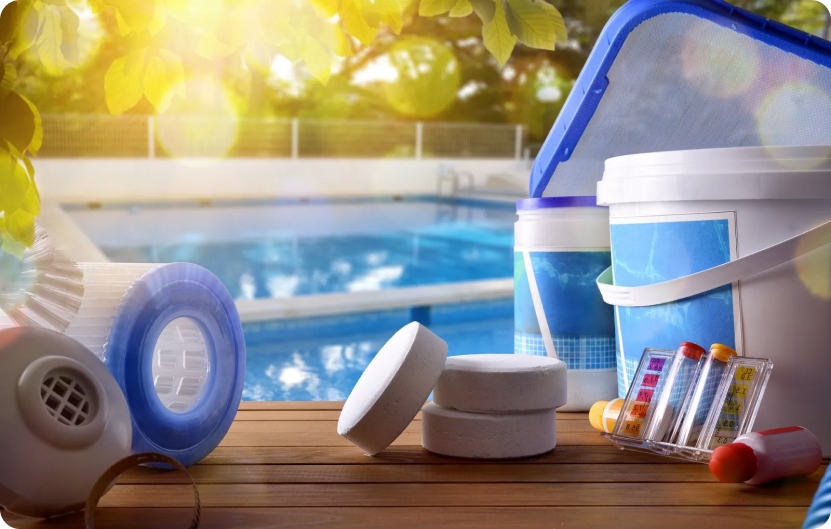
9. Safe Storage of Pool Chemicals and Cleaning Equipment
Pool chemicals and maintenance tools also require careful storage. Improperly handled treatment products can cause chemical burns, respiratory irritation, or dangerous reactions.
Keep chemicals in their original, clearly labeled containers and store them according to the manufacturer’s instructions. Maintain appropriate ventilation, protect products from unsuitable temperatures or moisture, and separate incompatible chemicals.
Never mix pool chemicals together, and do not store them in food or drink containers. Keep them locked away from children and pets.
Cleaning equipment should also be stored safely. Secure long poles, hoses, and other tools so they do not create trip hazards or provide children with a way to climb over barriers.
10. Build a Family Pool Safety Routine
Safety equipment works best when it is supported by consistent habits. Families should establish a routine that includes checking the pool area, supervising swimmers, and inspecting important safety features.
Before Swimming
- Check that gates and barriers are secure.
- Confirm that rescue equipment is accessible.
- Remove toys and obstacles from the pool deck.
- Review pool rules with children and guests.
- Ensure a responsible adult is actively supervising swimmers.
During Swimming
Maintain uninterrupted, attentive supervision of children. Avoid distractions such as mobile phones, reading, or household tasks while responsible for watching swimmers.
For gatherings, designate a specific water watcher who understands the responsibility and remains focused on supervision. Rotate this duty deliberately when needed so there is no gap in coverage.
After Swimming
Remove toys from the water and secure them away from the pool area. Close and secure access gates, inspect safety equipment for obvious damage, and store chemicals and cleaning supplies properly.
Regularly test alarms, inspect barriers, and check rescue equipment according to the manufacturer’s recommendations.
How to Choose the Right Swimming Pool Safety Equipment
The best safety setup depends on the pool’s layout, household needs, local regulations, and the ages and abilities of those who use the pool.
Start with essential protective measures, particularly compliant barriers and secure gates, appropriate rescue equipment, and a reliable supervision plan. Then assess whether alarms, safety covers, improved lighting, or additional access controls are suitable for your property.
When comparing products, consider durability, ease of inspection, installation requirements, compatibility, and compliance with recognized safety standards. Consult qualified pool safety professionals when you are unsure which equipment is appropriate.
Most importantly, avoid relying on a single product to prevent accidents. Multiple layers of protection provide a stronger approach to pool safety.
Conclusion
Essential swimming pool safety equipment helps families create a more secure environment for swimming, playing, and relaxing. Secure barriers, properly selected covers, rescue equipment, alarms, first-aid supplies, and slip-resistant surfaces each address different risks.
However, equipment alone cannot eliminate drowning or injury hazards. Active supervision, appropriate swimming and CPR training, secure chemical storage, and regular safety inspections remain fundamental parts of responsible pool ownership.
By combining suitable safety products with consistent family routines, pool owners can reduce preventable risks and make swimming a safer, more enjoyable activity for everyone.