Consistency is essential in commercial food sterilization. Manufacturers need equipment that can maintain controlled processing conditions across repeated production batches while protecting product quality and packaging integrity. Variations in temperature, pressure, water circulation, or processing time can affect the reliability of the final product. For this reason, modern retort systems increasingly incorporate automated controls and carefully engineered water distribution systems.
An Automatic Water Spray Autoclave Retort combines heated water circulation with programmable process control to support repeatable thermal processing. By coordinating heating, holding, pressure regulation, and cooling, this equipment helps manufacturers manage complex sterilization cycles with greater operational consistency. Its effectiveness depends on equipment design, accurate instrumentation, appropriate loading arrangements, and validated processing procedures.
Understanding Automatic Water Spray Autoclave Retorts
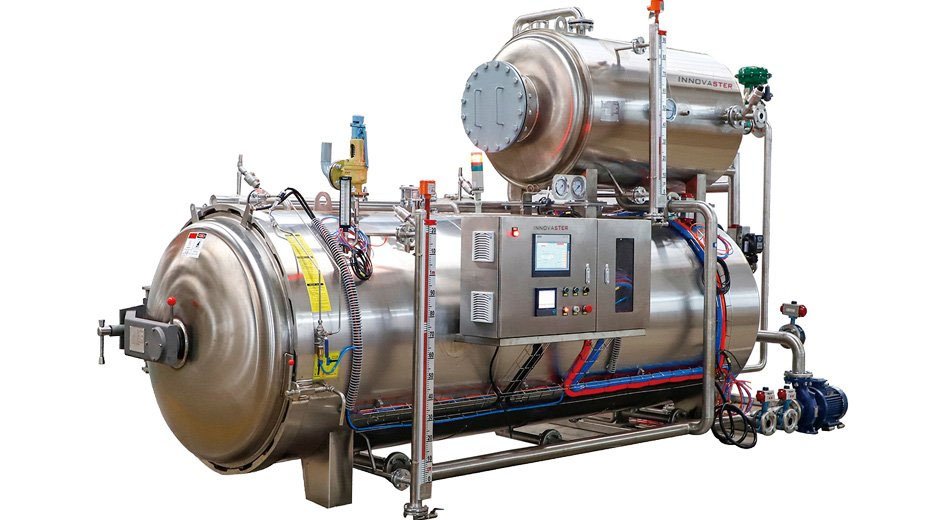
An automatic water spray autoclave retort is an industrial pressure vessel designed to sterilize sealed food containers using heated water distributed through spray nozzles.
During operation, water is heated and circulated throughout the chamber. The spray system exposes the product load to the processing medium, allowing thermal energy to transfer through the packaging and into the food.
The automatic control system manages key operating stages according to programmed parameters. Depending on the equipment configuration, these stages may include:
- Water circulation and preparation
- Heating and temperature regulation
- Pressure control
- Processing temperature holding
- Controlled cooling
- Cycle completion and data recording
These systems are used for compatible products such as canned foods, ready-to-eat meals, sauces, seafood, meat products, and retort pouch applications.
Why Repeatable Sterilization Cycles Matter
A commercial retort must provide consistent operating conditions from one batch to another. Repeatability is important because product safety and quality depend on the processing conditions experienced by each container.
Variations between cycles may result from inconsistent loading, changes in water flow, inaccurate sensors, or differences in heating performance.
Repeatable operation helps manufacturers:
- Maintain established processing parameters
- Reduce avoidable operating variations
- Support consistent product quality
- Improve production planning
- Maintain reliable batch records
- Identify deviations more effectively
Automation can help manage these responsibilities, but it does not replace thermal process validation or proper operator supervision.
Key Features That Support Consistent Performance
1. Programmable Logic Control
A programmable control system coordinates the main functions of the retort.
Operators can select authorized processing recipes designed for specific products and packaging formats. The system then manages the programmed stages according to established operating parameters.
Depending on the configuration, programmable controls may manage:
- Heating stages
- Temperature settings
- Holding time
- Water circulation
- Pressure regulation
- Cooling stages
- Process alarms
Recipe-based operation helps reduce manual adjustments and supports consistent execution of approved procedures.
2. Uniform Water Spray Distribution
Water distribution is one of the most important factors in a water spray retort.
Heated water must reach the product load effectively to support consistent heat transfer throughout the chamber.
The spray system generally consists of circulation pumps, piping, distribution manifolds, and strategically positioned nozzles.
Important design considerations include:
- Nozzle spacing and orientation
- Spray coverage
- Pump capacity
- Water flow characteristics
- Basket configuration
- Access for cleaning and inspection
A properly designed distribution system should be evaluated through temperature distribution testing under representative loading conditions.
3. Accurate Temperature Monitoring
Temperature measurement is essential for controlling the sterilization cycle.
Sensors provide information about chamber conditions so the control system can regulate heating and monitor whether the required operating parameters have been reached.
Important considerations include sensor accuracy, installation position, calibration, measurement range, and maintenance.
Reliable temperature monitoring supports process control and provides useful information for reviewing production batches.
4. Automatic Pressure Regulation
Pressure management helps protect sealed containers during heating and cooling.
As food temperature increases, pressure inside the package may also rise. The retort must maintain suitable external pressure conditions to reduce the risk of package deformation or seal damage.
Automatic pressure control may coordinate valves and other components to maintain the required conditions during different processing stages.
This is especially important for flexible pouches and semi-rigid containers, which may be more sensitive to pressure differences than conventional metal cans.
5. Controlled Heating System
The heating system must provide sufficient thermal energy to raise the circulating water to the required processing temperature.
Depending on the design, the retort may use steam injection or a heat exchanger.
Heating performance depends on several factors:
- Chamber volume
- Water quantity
- Product load
- Heating system capacity
- Circulation efficiency
- Available steam or other utilities
A properly sized heating system helps the retort reach and maintain established processing conditions without unnecessary operating delays.
6. Automated Cooling Control
Cooling is an essential part of the retort cycle.
After the holding stage, the product load must be cooled under controlled conditions. The system should regulate cooling water flow and pressure according to the validated process and packaging requirements.
Automatic cooling functions can help coordinate:
- Cooling water supply
- Water circulation
- Temperature reduction
- Pressure maintenance
- Cycle completion
Proper cooling management helps protect package integrity and prepares products for downstream handling.
How an Automatic Water Spray Retort Cycle Works
Although specific operating sequences vary by machine design, a typical processing cycle includes several stages.
Stage 1: Product Loading
Sealed containers are arranged in baskets or racks according to the approved loading configuration.
Adequate spacing and correct positioning help ensure that heated water can circulate around the product load.
Stage 2: Chamber Preparation
The retort door is closed and secured. The system prepares the chamber and circulation arrangement for the selected process.
Stage 3: Heating
Water is heated and circulated through the spray distribution system.
Temperature and pressure are monitored as the chamber moves toward the required processing conditions.
Stage 4: Holding
Once the required conditions are established, the system maintains the programmed holding stage.
The holding period must follow the scheduled process developed for the specific product and packaging combination.
Stage 5: Cooling
The system introduces cooling water and manages pressure during temperature reduction.
Cooling continues according to the established operating procedure.
Stage 6: Unloading
After the cycle is completed and the chamber reaches safe opening conditions, operators can unload the processed products.
The batch records can then be reviewed and retained according to the manufacturer’s quality management procedures.
Benefits of Automation in Commercial Food Processing
Automation can improve how manufacturers manage routine retort operations.
Reduced Manual Intervention
Programmable controls coordinate multiple operating stages, reducing the need for operators to make frequent manual adjustments.
Improved Process Consistency
Using established recipes helps reduce variations caused by inconsistent manual operation.
Better Production Monitoring
Temperature, pressure, timing, and alarm information can provide a clearer record of each processing cycle.
More Efficient Workflow Management
Automated cycle control can help operators coordinate production schedules and prepare equipment for subsequent batches.
Easier Identification of Deviations
Alarm functions and recorded operating data can help identify abnormal conditions that require investigation.
These benefits depend on suitable equipment configuration, trained personnel, and effective operating procedures.
Important Design Considerations When Selecting Equipment
Manufacturers should evaluate several technical factors before choosing an automatic water spray autoclave retort.
Chamber Capacity
The chamber should accommodate the required number of containers without restricting water circulation.
Capacity calculations should consider package dimensions, basket design, loading arrangements, and production targets.
Pressure Vessel Design
The chamber must be designed and manufactured for its intended pressure and temperature conditions.
Material selection, welding quality, sealing arrangements, inspection, and applicable pressure vessel standards should all be considered.
Pump and Circulation Performance
The circulation system should provide sufficient flow for the intended chamber configuration and product load.
Pump performance should be assessed alongside pipe dimensions, nozzle characteristics, and system resistance.
Control System Capabilities
Manufacturers should review the available automation functions, recipe management, sensor integration, alarm handling, and batch data recording.
The control system should support the required production procedures without introducing unnecessary complexity.
Maintenance Accessibility
Pumps, nozzles, valves, sensors, and other important components should be accessible for inspection and servicing.
A maintenance-friendly design can reduce avoidable downtime and help maintain reliable performance.
Packaging Compatibility and Process Requirements
Not every package responds to heat and pressure in the same way. Retort selection must therefore account for the packaging material and product characteristics.
Metal cans: These are commonly used for vegetables, meat, seafood, and other shelf-stable foods. The equipment must support suitable heating and cooling conditions for the can dimensions and closure design.
Glass jars: Glass containers require careful control of temperature changes to reduce thermal shock. Pressure and cooling arrangements should match the container specifications.
Retort pouches: Flexible packages require appropriate basket arrangements, spacing, and pressure management to protect seals and package structure.
Plastic trays: Only containers made from materials suitable for the intended retort conditions should be processed. Their shape, rigidity, sealing system, and pressure sensitivity must be considered.
Product formulation also influences thermal performance. Liquid products, thick sauces, particulate foods, and multi-component meals may have different heat penetration characteristics.
Process Validation and Quality Assurance
Automatic operation does not automatically guarantee commercial sterility. Manufacturers must establish that the equipment and processing schedule are suitable for the specific product, packaging, and production conditions.
Two important evaluations are commonly used.
Temperature distribution testing examines temperature variations throughout the retort chamber under defined loading and operating conditions.
Heat penetration testing evaluates how heat reaches the slowest-heating location inside the food container.
These studies provide essential information for qualified thermal processing specialists when establishing scheduled processes.
For low-acid shelf-stable foods, manufacturers must follow applicable regulatory requirements and use scientifically established processing schedules.
Any significant change to formulation, fill weight, container dimensions, initial product temperature, or loading configuration may require a process review or revalidation.
Maintenance Practices for Reliable Operation
Regular maintenance helps preserve the performance of automated retort equipment.
A preventive maintenance program should include:
- Pump inspection: Check circulation performance, motor condition, and mechanical seals.
- Nozzle cleaning: Remove deposits that may restrict water distribution.
- Valve inspection: Check for leakage, wear, and correct operation.
- Sensor calibration: Verify temperature and pressure measurement accuracy.
- Door seal inspection: Check sealing surfaces for damage or deterioration.
- Heating system maintenance: Inspect steam connections, heat exchangers, and associated components.
- Control system checks: Review alarms, sensor signals, and cycle records.
- Safety device testing: Follow approved inspection and testing procedures.
Maintenance should be performed by qualified personnel in accordance with manufacturer recommendations and applicable regulations.
Common Factors That Can Affect Cycle Repeatability
Even an automated retort can experience inconsistent performance if important operating conditions are not controlled.
- Incorrect product loading: Overloading or unsuitable container spacing can restrict water circulation.
- Blocked spray nozzles: Deposits or foreign material can affect water distribution.
- Insufficient circulation: Pump problems or system restrictions may reduce water flow.
- Inaccurate sensors: Poor calibration can lead to incorrect process measurements.
- Unstable pressure: Faulty valves or control issues can affect packaging protection.
- Unapproved recipe changes: Adjusting processing parameters without technical review can compromise process reliability.
Addressing these issues requires preventive maintenance, operator training, process monitoring, and documented procedures.
Conclusion
Automatic water spray autoclave retorts support commercial food manufacturers by combining controlled water distribution, programmable operation, temperature monitoring, pressure regulation, and managed cooling. These features help establish repeatable operating conditions and improve the monitoring of individual sterilization cycles.
However, dependable performance requires more than automation. Equipment capacity, packaging compatibility, circulation efficiency, instrument accuracy, preventive maintenance, and validated thermal processing schedules must work together. When these factors are properly addressed, automatic water spray retorts can support consistent production, reliable process records, and effective food manufacturing operations.