Bathroom fixtures face regular exposure to water, soap, cleaning products, and daily handling. Their material affects how they look after years of use and how much effort they require to maintain. For homeowners planning a bathroom renovation, solid surface offers an alternative to traditional ceramic and porcelain.
A Small bathroom basin made from solid surface material may offer a useful combination of design flexibility, smooth finishing, and practical maintenance. However, its higher purchase price compared with some conventional options raises an important question. Does the material provide enough long-term value to justify the additional cost? The answer depends on its construction, expected use, installation requirements, and care needs.
What Is Solid Surface Material?
Solid surface is a manufactured material commonly used for bathroom countertops, basins, and other interior fixtures. Manufacturers typically combine mineral fillers with resin to create a dense, non-porous surface. The exact composition varies between products, so buyers should check the technical specifications before comparing models.
Unlike natural stone, solid surface does not rely on a single piece of quarried material. Manufacturers can shape it into different forms and create consistent colors and finishes. This flexibility makes it suitable for contemporary bathrooms that use integrated surfaces and clean geometric designs.
Its smooth texture also supports practical cleaning. Without the natural pores found in some stone materials, a properly manufactured solid surface basin offers less opportunity for dirt and moisture to penetrate the material.
Why Solid Surface Basins Often Cost More
The price of a solid surface basin reflects more than its appearance. Material composition, manufacturing processes, mold design, finishing, and quality control all contribute to the final cost.
Some designs require specialized molds to produce curved interiors, integrated edges, or unusual dimensions. Manufacturers also need to control the surface finish and ensure consistent material thickness. These requirements may increase production costs compared with simpler ceramic models.
The price can also vary according to:
- Material composition: Different mineral and resin ratios affect product characteristics and manufacturing costs.
- Design complexity: Custom shapes and integrated structures may require more specialized production.
- Dimensions: Larger or thicker models generally use more material.
- Surface finish: Special colors and textures may influence the final price.
- Manufacturing quality: Consistent finishing and quality checks contribute to product value.
A higher price does not automatically mean better performance. Buyers need to compare construction details, warranties, and care requirements rather than treating cost as the only quality indicator.
Five Advantages That May Justify the Investment
1. Flexible Shapes and Contemporary Designs
One of the main strengths of solid surface is its design flexibility. Manufacturers can produce rounded bowls, rectangular forms, integrated countertops, and other shapes that may be difficult to achieve with traditional materials.
This flexibility helps designers work with unusual bathroom dimensions. A custom-shaped basin may fit a narrow vanity or align with a specific wall layout without relying on a standard bowl size.
Solid surface also supports a consistent appearance across the basin and surrounding countertop. This creates a continuous design that suits contemporary interiors.
2. Smooth and Non-Porous Surface
A non-porous surface offers practical benefits in a bathroom. Water, soap, and everyday residue are less likely to penetrate a properly finished solid surface than a porous material.
Routine cleaning generally requires a soft cloth and a suitable mild cleaner. The absence of deep surface pores also helps reduce the buildup of dirt in the basin itself.
However, non-porous does not mean maintenance-free. Soap deposits, mineral marks, and other residue can still appear. Regular cleaning remains necessary to keep the fixture in good condition.
3. Consistent Color and Appearance
Solid surface materials can provide consistent color throughout the manufactured product, depending on their construction. This can be useful when the basin receives a scratch or minor surface repair is possible.
Some surface damage may respond to manufacturer-approved sanding or refinishing methods. This differs from a glazed ceramic finish, where damage to the glaze may expose the material underneath.
Repairability depends on the specific product and the depth of the damage. Buyers should ask the supplier which repairs are possible and whether professional treatment is necessary.
4. Seamless and Integrated Designs
Solid surface works well in integrated bathroom installations. A basin and countertop can form a continuous unit with fewer visible joints than separate fixtures.
Fewer joints can make cleaning around the bowl easier and create a more unified appearance. This is particularly useful for compact bathrooms where a crowded countertop may make the space feel less organized.
The quality of the joints and installation still matters. Poor workmanship can affect the finished appearance and allow moisture to collect around connections.
5. Comfortable Everyday Use
The smooth finish and rounded edges available in many solid surface designs can make the basin comfortable for regular use. Manufacturers can also create different bowl depths and proportions to suit specific requirements.
A well-designed interior helps direct water toward the drain and reduces unnecessary splashing. The final performance still depends on bowl geometry and faucet positioning rather than the material alone.
Potential Drawbacks to Consider
Solid surface has several useful qualities, yet it also has limitations. Understanding these drawbacks helps buyers decide whether the additional expense makes sense.
Higher Initial Purchase Price
The upfront cost may be higher than that of basic ceramic or porcelain basins. This can affect renovation budgets, especially when a project includes several bathrooms.
The difference becomes more significant when buyers choose custom sizes, integrated countertops, or specialized finishes. Compare the complete installation cost rather than looking at the basin price alone.
Heat and Chemical Sensitivity
Solid surface products have specific limits for heat and chemical exposure. Placing very hot objects directly on the material or using harsh cleaning chemicals may damage certain formulations.
Bathroom use rarely involves extreme heat, yet unsuitable cleaning products can still cause surface problems. Follow the manufacturer’s instructions and avoid experimenting with strong solvents or abrasive cleaners.
Risk of Scratches and Impact Damage
Solid surface can develop scratches from rough objects or abrasive cleaning tools. Heavy impacts may also cause chips or cracks, depending on the product’s composition and thickness.
Minor marks may be repairable, but deep damage can require professional attention. This makes product quality and correct installation important factors in long-term performance.
Solid Surface vs Ceramic and Porcelain
Comparing solid surface with traditional basin materials provides a clearer view of its value. Each option has strengths that suit different budgets and bathroom requirements.
| Feature | Solid Surface | Ceramic and Porcelain |
| Design flexibility | Supports varied shapes and integrated designs | Usually follows standard molded forms |
| Surface texture | Smooth and generally non-porous | Hard glazed finish |
| Repair options | Some scratches may allow refinishing | Glaze damage is often difficult to repair |
| Heat resistance | Depends on the material formulation | Generally handles normal bathroom conditions well |
| Cleaning | Usually requires mild cleaning products | Generally easy to clean |
| Initial cost | Often higher | Available across a wide price range |
| Appearance | Supports integrated and custom designs | Offers familiar glossy and selected matte finishes |
Ceramic or porcelain may provide better value for buyers who need a straightforward basin at a lower price. Solid surface may make more sense when design flexibility, integrated construction, and potential repair options matter more.
Is Solid Surface Suitable for Small Bathrooms?
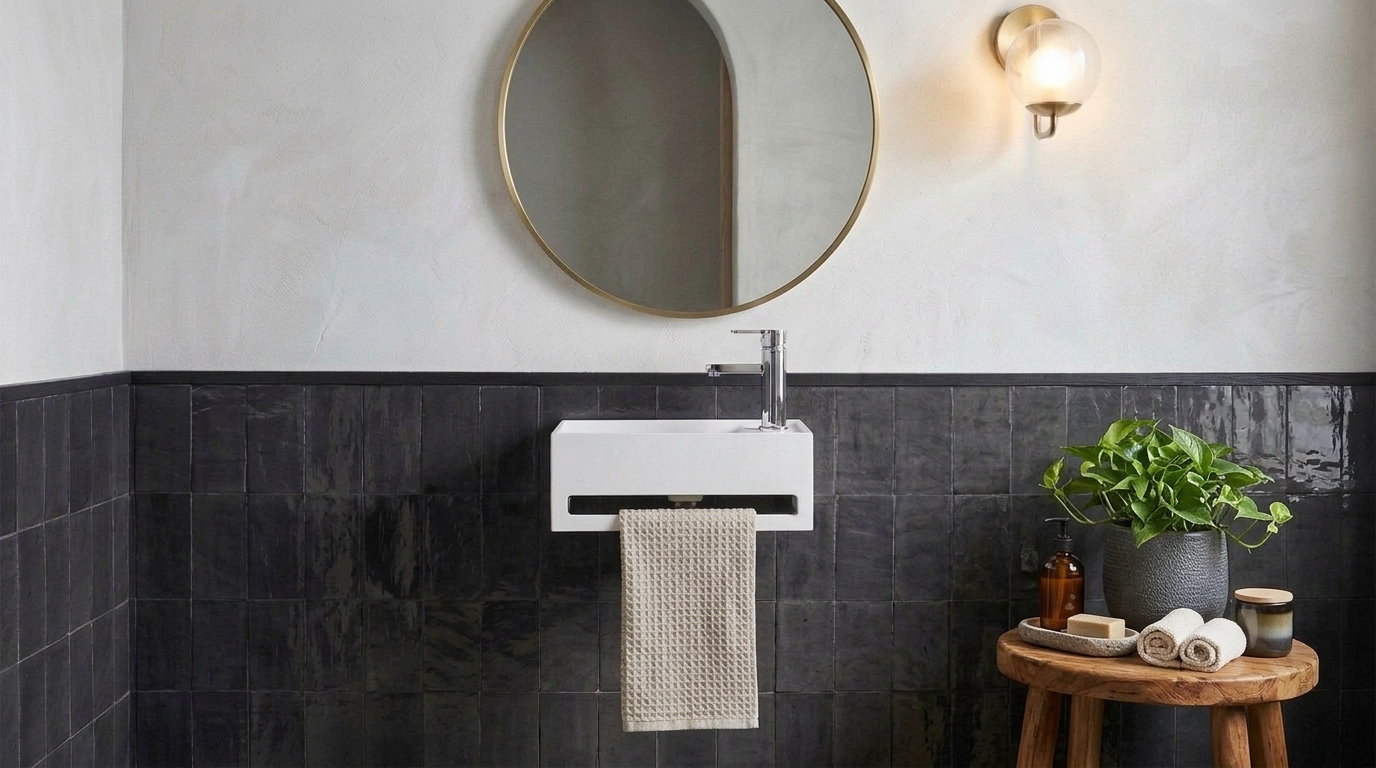
Small bathrooms often have limited room for bulky fixtures and unnecessary countertop details. Solid surface can suit these spaces because manufacturers can create compact bowls, slim profiles, and integrated units.
A wall-mounted solid surface basin may leave more visible floor space and make cleaning easier. An integrated countertop design can reduce visible joints and provide a consistent surface around the bowl.
However, material choice cannot compensate for poor dimensions. Buyers still need to check the basin’s width, projection, internal depth, and faucet clearance. A compact model with an awkward bowl shape may be less practical than a slightly larger design with better proportions.
Storage also deserves attention. A basin with an integrated vanity or narrow side shelf may offer more everyday convenience than a standalone bowl with no surrounding surface.
How to Check Quality Before Buying
Not all solid surface basins have the same composition or manufacturing quality. Two products may look similar in photographs yet differ in thickness, finish, and resistance to everyday wear.
Before ordering, request clear product specifications and ask the supplier about the following points:
- Material composition: Confirm the type of solid surface and its main components.
- Product thickness: Check the bowl and rim construction rather than relying on external dimensions.
- Surface finish: Look for a consistent finish without visible rough patches or uneven coloring.
- Drainage design: Confirm the outlet position and compatibility with standard plumbing fittings.
- Repair guidance: Ask how the manufacturer handles scratches, chips, and surface damage.
- Warranty coverage: Review which defects and performance issues the warranty includes.
- Installation instructions: Check the required support, mounting hardware, and fitting method.
Product samples can also help buyers assess the actual color and texture. This is particularly useful when matching the basin with a countertop, vanity, or wall finish.
Maintenance Costs and Long-Term Value
The purchase price is only one part of the investment. Cleaning products, repairs, installation, and possible replacement costs also affect the total amount spent over the basin’s service life.
Solid surface may offer value through its design flexibility and the possibility of repairing certain surface marks. However, those benefits depend on the material quality and availability of suitable repair services.
A sensible maintenance routine includes wiping away soap residue, drying areas that collect water, and using non-abrasive cleaning products. Avoid dropping heavy objects into the bowl and follow the supplier’s instructions for stubborn stains.
For homeowners who plan to keep the same bathroom design for many years, a well-made solid surface basin may justify its higher initial cost. Buyers who expect frequent renovations or need to control upfront spending may find ceramic or porcelain more suitable.
Is It Worth the Investment?
A solid surface basin is worth considering when design flexibility, integrated construction, and a smooth surface are important priorities. Its ability to support custom shapes and consistent finishes makes it a strong option for contemporary bathroom projects.
The investment may be less attractive when the budget is tight or the bathroom only needs a simple, standard fixture. Ceramic and porcelain remain practical alternatives that offer reliable everyday performance across many price ranges.
Buyers exploring solid surface options from manufacturers such as kingkonree should compare material specifications, installation requirements, warranty terms, and repair guidance before making a decision. The best purchase is not simply the most expensive model. It is the basin that meets the bathroom’s design needs and provides suitable performance for its expected use.