Manufacturing productivity depends on how efficiently materials move through each stage of production, including packaging. When cartons are prepared manually, the process can become a bottleneck due to repetitive tasks, inconsistent folding, and labor availability. Automating carton preparation helps manufacturers maintain a steady workflow while reducing delays between product assembly and packaging.
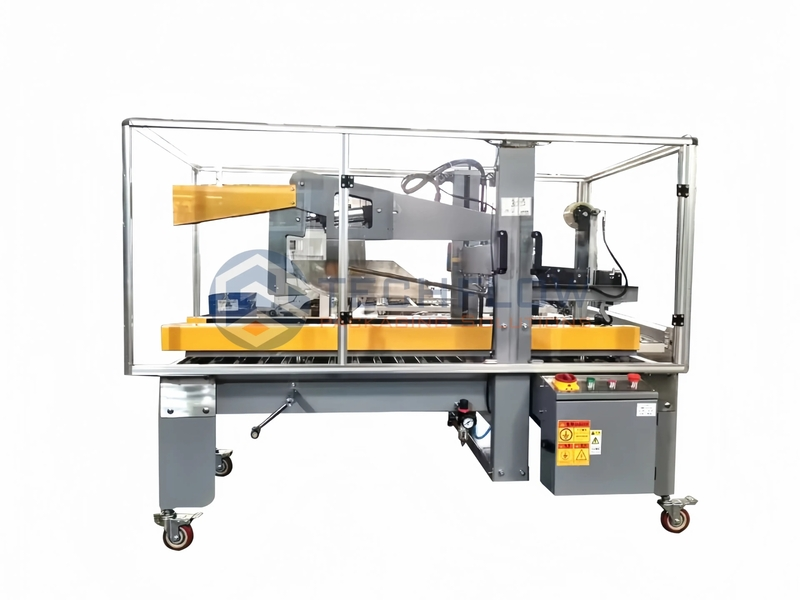
A modern Case Erecting Machine automates the process of forming flat-packed cartons into open boxes ready for filling. By handling carton feeding, folding, and bottom sealing, the equipment reduces the need for manual intervention. This allows packaging teams to focus on other essential activities and helps production lines operate with greater consistency.
Reducing Manual Work and Improving Labor Efficiency
Manual carton erection requires employees to repeatedly open, fold, and prepare boxes. Although this task may seem simple, performing it throughout a production shift can consume considerable time and physical effort. It can also lead to fatigue, which may affect work speed and consistency.
Automation reduces the amount of repetitive handling required from employees. Instead of preparing every carton by hand, operators can supervise the equipment, replenish carton blanks, and monitor the packaging process. This makes better use of available labor and allows workers to contribute to tasks that require more attention or judgment.
Increasing Packaging Line Speed
One of the most noticeable productivity benefits of automation is improved packaging speed. Manual carton preparation can struggle to keep pace with high-volume manufacturing, particularly when production output increases or multiple packaging stations operate simultaneously.
An automated system forms cartons according to its configured operating cycle, helping maintain a more predictable supply of boxes. When properly matched to the production line, it can reduce waiting time at the filling station and support smoother product movement through packaging.
However, the overall speed improvement depends on several factors, including machine capacity, carton dimensions, material quality, and downstream equipment performance. Selecting a system that aligns with actual production requirements is therefore important.
Improving Carton Quality and Consistency
Productivity is not determined by output volume alone. Consistent packaging quality also matters because poorly formed cartons can cause interruptions, sealing problems, product damage, or difficulties during transportation.
Automated carton forming helps standardize key preparation steps. Controlled folding and sealing processes can produce more uniform cartons than manual handling, provided that the machine is correctly adjusted and maintained.
Consistency is particularly valuable in facilities where packaging specifications must remain stable across different shifts. Reliable carton formation can reduce avoidable rework and help maintain predictable results throughout production.
Minimizing Packaging Bottlenecks
A bottleneck occurs when one stage of production cannot keep up with the output of other operations. If employees cannot prepare cartons quickly enough, products may accumulate while waiting for packaging materials.
Automating carton erection can help address this issue by supplying prepared boxes at a consistent rate. This supports better coordination between product processing, filling, sealing, and case handling.
For the best results, manufacturers should evaluate the entire packaging line rather than focusing only on the speed of the carton-forming equipment. The machine’s output should be compatible with the capacity of connected conveyors, filling systems, and sealing equipment.
Supporting Better Use of Production Space
Manual carton preparation often requires dedicated work areas where flat cartons are opened and assembled. These activities may involve additional tables, storage arrangements, and movement between workstations.
An automated carton erector can organize this stage into a more defined process. Depending on its design and installation requirements, it may help manufacturers arrange packaging operations more efficiently and reduce unnecessary movement around the production floor.
Before installation, businesses should assess available floor space, carton storage needs, operator access, and maintenance clearance. A suitable layout can improve material flow without creating congestion around the equipment.
Reducing Operational Costs Over Time
Automation requires an initial investment, but it can contribute to long-term operational savings. Reduced manual handling, fewer packaging interruptions, and more consistent carton preparation may help lower the indirect costs associated with packaging operations.
Manufacturers should consider the total cost of ownership when evaluating equipment. This includes purchase and installation costs, energy consumption, routine maintenance, spare parts, training, and expected service life.
A realistic assessment should also account for production volume and labor requirements. The financial benefits are generally more meaningful when the equipment is used consistently and its capacity matches the facility’s workload.
Strengthening Production Planning and Workflow Control
Automated packaging equipment can make production planning more predictable. When carton preparation follows a controlled process, supervisors can better coordinate the availability of boxes with product output and downstream packaging activities.
This can support more accurate scheduling, improve communication between production teams, and make it easier to identify delays. Operators can also monitor machine performance and respond to issues before they create larger disruptions.
To achieve these benefits, manufacturers should establish clear operating procedures, provide appropriate staff training, and monitor indicators such as machine availability, carton rejection rates, and packaging output.
Important Factors for Successful Automation
The impact of carton erection automation depends on choosing equipment that suits the facility’s operational needs. Before investing, manufacturers should consider:
- Production capacity: Confirm that the machine can support current output and anticipated demand.
- Carton compatibility: Check the supported carton sizes, styles, and board specifications.
- Integration requirements: Ensure the equipment can work with existing conveyors, filling machines, and case sealers.
- Changeover flexibility: Consider how easily operators can adjust the system when carton sizes or packaging formats change.
- Maintenance support: Review access to technical assistance, spare parts, and maintenance documentation.
- Operator training: Make sure employees understand safe operation, routine checks, and basic troubleshooting.
These considerations help prevent mismatches between equipment capabilities and actual production requirements.
Conclusion
Case erecting automation can have a meaningful impact on manufacturing productivity by reducing repetitive manual work, improving carton consistency, supporting faster packaging operations, and minimizing workflow bottlenecks. It can also contribute to better labor utilization and more predictable production planning.
The greatest benefits come from selecting equipment that matches the facility’s carton specifications, production volume, and existing packaging setup. With appropriate integration, operator training, and preventive maintenance, automated carton preparation can become a reliable part of an efficient manufacturing process.