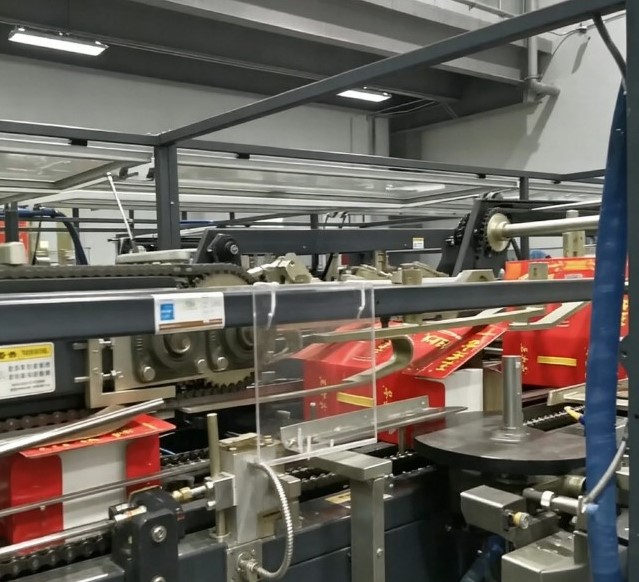
Cartons and multipacks often need careful handling before they enter a shipping case. Their dimensions, weight, orientation, and pack count all affect how products move through an automated packaging line.
A wrap around case packer handles these products by organizing them into a defined group before positioning them with a corrugated blank. The system then folds the blank around the grouped products to create the finished case.
Why Cartons and Multipacks Need Controlled Handling
Cartons usually have flat surfaces and defined edges, which makes them suitable for automated grouping. Multipacks can present different challenges because several individual products already form one larger package.
The equipment needs to maintain product spacing and orientation throughout the process. Any unexpected movement can affect the final arrangement inside the case.
A controlled product flow also helps prevent collisions, product damage, and inconsistent case formation.
How Cartons Enter the Packing Line
Cartons typically arrive through an infeed conveyor after filling, sealing, or labeling. The conveyor maintains a steady product flow while guides and other handling components keep cartons aligned.
The system then creates the required quantity for each case. Depending on the application, products may travel in a single lane or through multiple lanes before reaching the grouping section.
Consistent spacing gives the packing system better control over the final case arrangement.
Grouping Cartons Into Case Loads
Before case formation begins, cartons need to reach the correct configuration. The grouping process determines how many cartons enter each case and how they sit relative to one another.
For example, a case may hold several cartons in rows and columns. Another application may require a different orientation to make better use of the available case space.
The machine setup must reflect the required product count and arrangement rather than simply moving products forward at a constant speed.
Handling Different Multipack Formats
Multipacks can range from compact bundles to larger packages containing several individual products. Their size and weight may differ considerably between applications.
The packing system needs to accommodate these differences without losing control of the product group.
Important considerations include:
- Multipack dimensions
- Overall case weight
- Product orientation
- Number of multipacks per case
- Surface condition and friction
- Required spacing between products
- Desired shipping case dimensions
These factors influence both the product handling process and the final case design.
Maintaining Product Orientation
Orientation matters when cartons or multipacks have specific front, side, or top surfaces that need to face a certain direction.
Conveyors and guides can help maintain the desired orientation as products approach the loading area. The system must also prevent products from rotating or drifting out of position.
Stable orientation becomes especially important when the case has a tight internal fit.
Loading Products Into the Corrugated Blank
Once the product group reaches the correct configuration, the corrugated blank moves into position around the load.
The machine coordinates the product group with the blank so that each panel folds at the intended location. The products effectively provide the internal shape around which the case forms.
Accurate positioning helps create clean corners, consistent panels, and a properly enclosed product group.
Dealing With Different Carton Sizes
Manufacturers may package several carton sizes on the same production line. Each size can require different grouping and case dimensions.
Changeover settings allow the equipment to accommodate these variations. Operators may need to adjust product guides, spacing, conveyor positions, and other machine parameters.
The goal remains the same during each changeover. The machine should create a repeatable product group that matches the selected case format.
Managing Lightweight Cartons
Lightweight cartons can move differently from heavier products. Excessive conveyor speed or sudden changes in direction may cause them to shift or rotate.
Gentle product handling helps maintain the intended arrangement. Proper guide positioning can also reduce unwanted movement without placing excessive pressure on the cartons.
This becomes particularly useful when products have smooth surfaces or relatively low weight.
Handling Heavier Multipacks
Heavy multipacks create a different set of requirements. Conveyors, transfers, and product stops need enough capacity to move the load consistently.
The finished case also needs sufficient structural strength to support the combined product weight.
This makes product weight an important factor when selecting both the packing configuration and the corrugated material.
Case Design and Product Arrangement Work Together
The product arrangement directly affects the finished case dimensions. Changing the number or orientation of cartons may require a different blank size.
A case that holds products too loosely may allow unnecessary movement during transportation. A case that fits too tightly may create excessive pressure during forming and sealing.
The most suitable configuration provides enough clearance for reliable packing while keeping the products stable inside the finished case.
Common Problems During Carton and Multipack Packing
Most packing problems become easier to identify when manufacturers look at the complete product flow rather than only the case-forming section.
Common issues include:
- Cartons arriving with inconsistent spacing
- Multipacks rotating during transfer
- Incorrect product counts
- Groups entering the loading area too early or too late
- Excessive pressure between products
- Cases forming unevenly
- Product movement during case compression
Correcting the source of the problem often improves the entire packing cycle.
What Should Manufacturers Test Before Production?
A production trial can reveal how cartons or multipacks behave under actual operating conditions.
Manufacturers should evaluate the complete process, from infeed through finished-case outfeed. Testing should include the fastest expected production rate and all planned product configurations.
Key areas to check include product stability, grouping accuracy, case dimensions, folding quality, adhesive bonding, and finished-case appearance.
How Techflow Pack Supports Case Packing Applications
Techflow Pack develops packaging equipment for automated case packing applications where product characteristics and packaging requirements need to work together.
When cartons or multipacks form part of a production line, factors such as product dimensions, case configuration, production speed, and changeover requirements help determine the appropriate machine setup.
A detailed review of these factors before installation can help manufacturers select a system that fits their actual production needs.
Final Thoughts
Cartons and multipacks require controlled movement from the moment they enter the packaging line until the corrugated case closes around them. Product grouping, orientation, spacing, and case dimensions all influence the final result.
A properly configured packing system keeps products organized while coordinating them with the corrugated blank. This approach supports consistent case formation and reduces problems caused by product movement.
Techflow Pack can help manufacturers evaluate case packing requirements based on their products, packaging formats, and production goals. Careful planning at the beginning helps create a more reliable automated packing process.