Outdoor signage is a key element of modern business branding, helping companies attract attention, improve visibility, and communicate identity in competitive environments. While design and lighting are important, the way a sign is mounted and displayed plays an equally critical role in its effectiveness. Proper mounting ensures stability, visibility, and long-term durability, especially in outdoor conditions.
Businesses today have multiple installation choices depending on their storefront structure, branding goals, and environmental conditions. A well-planned custom outdoor neon sign can achieve maximum impact when paired with the right mounting method and display technique.
Wall-Mounted Installation for Standard Storefronts
Wall mounting is one of the most common and practical methods for outdoor signage. It involves securing the sign directly onto a building façade, making it highly visible to passing pedestrians and vehicles.
This method works well for retail stores, cafés, salons, and offices where the storefront is the primary point of customer interaction. Wall-mounted signs are typically installed at eye level or slightly above to ensure optimal visibility.
Proper anchoring is essential to maintain stability, especially in areas exposed to wind or weather changes.
Flush Mounting for a Clean and Minimal Look
Flush mounting is a technique where the sign is installed directly against the surface without any visible spacing. This creates a clean, modern appearance that blends seamlessly with the building exterior.
This style is often used by businesses that prefer a minimalist aesthetic or want their signage to feel integrated into the architecture. It reduces visual clutter while maintaining strong brand presence.
Flush mounting is particularly effective for contemporary storefront designs and professional office environments.
Stand-Off Mounting for Depth and Visual Impact
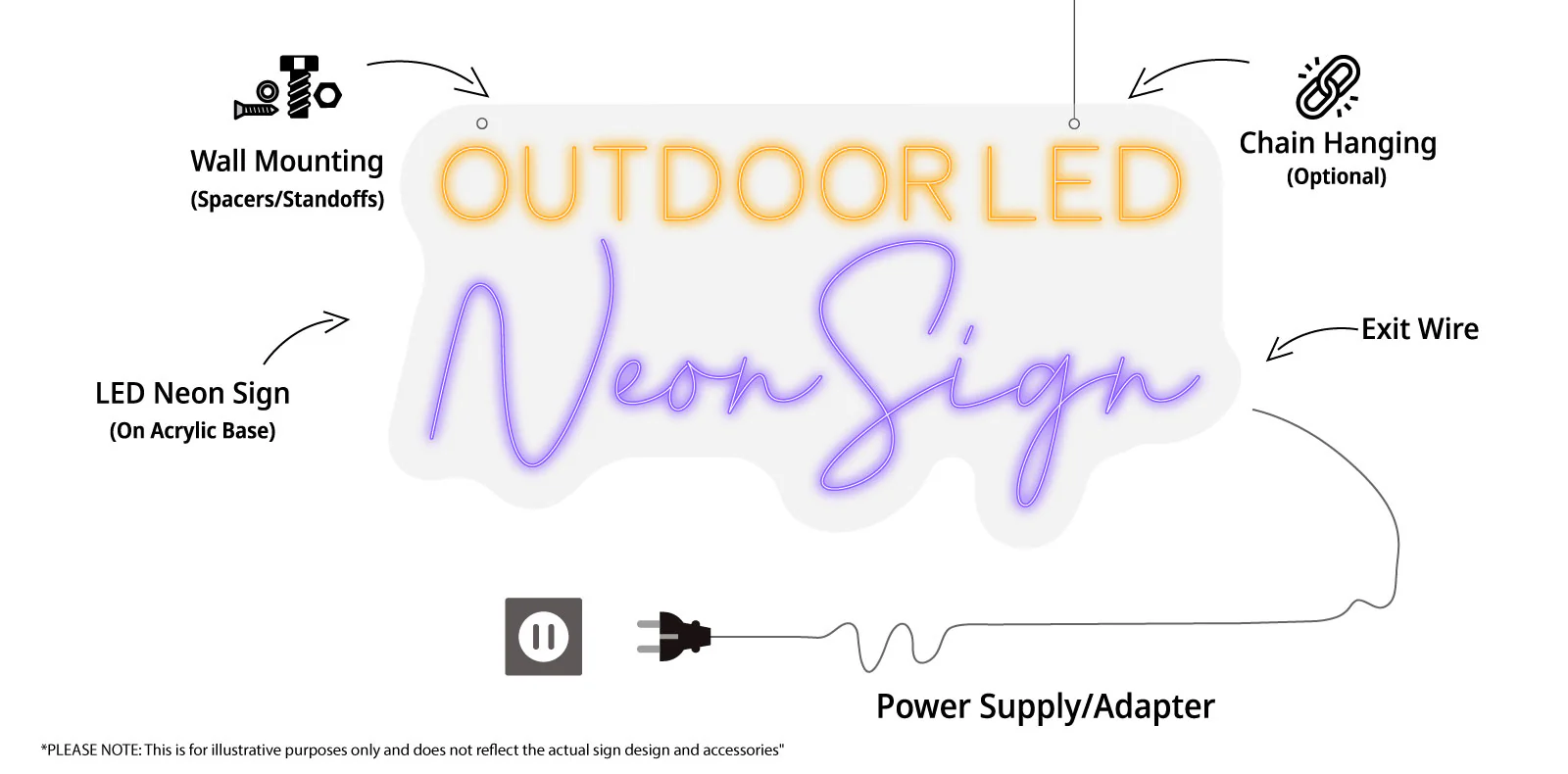
Stand-off mounting involves attaching the sign slightly away from the wall using spacers or brackets. This creates a floating effect that adds depth and dimension to the display.
The shadow and lighting contrast generated by this spacing enhance visibility, especially at night when illuminated signage becomes more prominent.
This technique is widely used in premium branding environments where businesses want to create a more dynamic and visually striking presentation.
Hanging Installation for Flexible Display
Hanging mounts are often used in areas where wall space is limited or when a double-sided display is required. The sign is suspended using chains, cables, or brackets attached to overhead structures.
This method is commonly seen in shopping districts, indoor-outdoor transitional spaces, and storefronts with awnings or canopies.
Hanging installations allow the sign to be visible from multiple directions, increasing exposure to foot traffic coming from different angles.
Corner Mounting for Multi-Directional Visibility
Corner mounting is an effective strategy for businesses located at intersections or corner buildings. By placing the sign at the corner, visibility is maximized from two or more directions.
This setup ensures that the brand is visible to both pedestrians and vehicles approaching from different streets. It significantly increases exposure compared to single-direction installations.
Corner-mounted signage is especially valuable in high-traffic commercial zones.
Window Display Mounting for Interior-Exterior Visibility
Some businesses choose to install neon signage on or near windows to create visibility from both inside and outside the store. This technique is often used in cafés, boutiques, and entertainment venues.
Window-mounted signs help create an inviting atmosphere while also reinforcing brand identity to passersby. They are particularly effective during nighttime when interior lighting enhances visibility.
This method also allows flexibility in repositioning or updating displays.
Ground and Freestanding Display Options
In addition to wall and window installations, some businesses use freestanding or ground-mounted displays. These structures are placed outside storefronts or event spaces and are supported by dedicated frames or bases.
Freestanding signs are highly versatile and can be relocated as needed, making them ideal for promotional campaigns or temporary setups.
They are often used in outdoor events, exhibitions, and seasonal marketing activities.
Importance of Secure Installation and Safety
Regardless of the mounting method, safety is a critical consideration. Outdoor signage must be securely installed to withstand environmental conditions such as wind, rain, and temperature changes.
Proper hardware, professional installation, and regular maintenance help ensure long-term stability and safe operation.
Neglecting installation quality can lead to reduced performance or potential safety risks.
Conclusion
Mounting and display techniques play a crucial role in the effectiveness of outdoor signage. The right installation method enhances visibility, improves aesthetics, and ensures long-term durability in different environments.
A well-installed custom outdoor neon sign not only strengthens brand presence but also maximizes the impact of its design and illumination. By selecting appropriate mounting options, businesses can achieve both functional performance and strong visual appeal in their storefront advertising strategy.