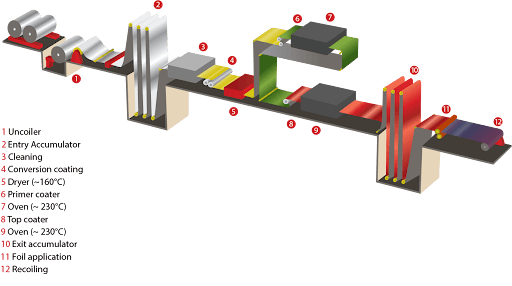
In modern metal processing industries, maintaining consistent product quality requires strict process control and advanced quality assurance systems. A colour coating line is a highly automated production system where precision in every stage directly determines the durability, appearance, and performance of coated metal products. From surface preparation to final recoiling, each process must be carefully monitored to ensure stable output quality.
A modern colour coating line integrates intelligent control systems, real-time monitoring tools, and standardized inspection methods to maintain uniform coating quality across large-scale production. These systems help manufacturers reduce defects, optimize efficiency, and ensure compliance with industrial standards.
Importance of Process Control in Colour Coating Lines
Process control is essential in ensuring that every stage of coating production operates within defined parameters. Even small deviations in temperature, coating thickness, or chemical concentration can significantly affect product quality.
Key objectives of process control include:
- Maintaining consistent coating thickness
- Ensuring stable chemical treatment conditions
- Controlling line speed and tension
- Minimizing production defects
Effective process control ensures that the final product meets both functional and aesthetic requirements.
Raw Material Inspection and Entry Control
Quality assurance begins before the metal coil enters the production line. Proper inspection ensures that only suitable materials proceed to processing.
Key checks include:
- Surface cleanliness and contamination levels
- Dimensional accuracy of steel or aluminum coils
- Presence of defects such as rust, scratches, or dents
Rejecting or correcting defective materials at this stage helps prevent downstream quality issues.
Surface Treatment Process Control
The pre-treatment stage is one of the most critical areas for quality assurance. It directly impacts coating adhesion and corrosion resistance.
Control measures include:
- Monitoring chemical concentration in cleaning tanks
- Regulating rinsing water quality and flow rate
- Ensuring uniform conversion coating coverage
- Maintaining proper drying conditions
Stable surface preparation ensures a strong foundation for coating application.
Coating Application Control Methods
The coating process requires precise control over multiple parameters to ensure uniform thickness and color consistency.
Key control methods include:
- Regulating roller speed and pressure
- Controlling paint viscosity and flow rate
- Monitoring coating thickness using sensors
- Adjusting line speed in real time
These measures help eliminate defects such as streaks, uneven coating, or color variation.
Curing Process and Temperature Control
Curing is a critical stage where coating layers are hardened under controlled heat conditions. Improper curing can lead to weak adhesion or surface defects.
Quality control methods include:
- Multi-zone oven temperature monitoring
- Automated feedback temperature adjustments
- Controlled heating and cooling cycles
- Continuous airflow regulation
Proper curing ensures durability, hardness, and resistance to environmental factors.
Real-Time Monitoring and Automation Systems
Modern colour coating lines rely heavily on automation for process control. Sensors and digital systems continuously collect and analyze production data.
Key technologies include:
- PLC-based control systems
- HMI operator interfaces
- Thickness and color measurement sensors
- Real-time fault detection systems
These tools allow operators to quickly identify and correct deviations during production.
Quality Assurance Testing Methods
After production, coated materials undergo strict testing to ensure they meet quality standards. These tests evaluate both functional and aesthetic properties.
Common testing methods include:
- Adhesion strength testing
- Corrosion resistance testing
- Surface hardness evaluation
- Color consistency analysis
- Scratch and wear resistance tests
Only products that pass all quality checks are approved for shipment.
Defect Detection and Correction Systems
Advanced production lines include automated defect detection systems that identify issues early in the process.
These systems can detect:
- Surface scratches or dents
- Uneven coating thickness
- Color inconsistencies
- Coating bubbles or peeling
Early detection reduces waste and improves overall production efficiency.
Role of Operators in Quality Assurance
Although automation plays a major role, skilled operators remain essential for maintaining quality standards.
Operator responsibilities include:
- Monitoring system performance
- Adjusting process parameters when needed
- Performing routine inspections
- Responding to alarms and system alerts
Proper training ensures better decision-making and smoother production operations.
Conclusion
Process control and quality assurance are fundamental to the success of a colour coating line. By combining automated monitoring systems, precise process adjustments, and rigorous testing methods, manufacturers can ensure consistent product quality and high production efficiency.
As industrial standards continue to rise, advanced quality control systems will play an even more important role in improving reliability, reducing defects, and enhancing the overall performance of coated metal products.